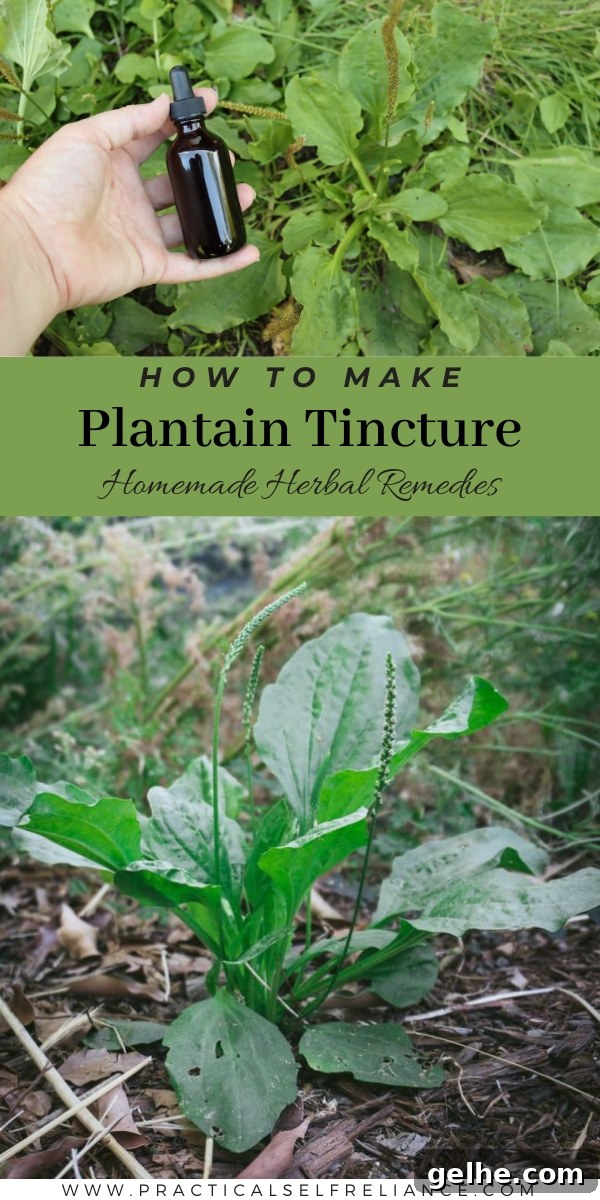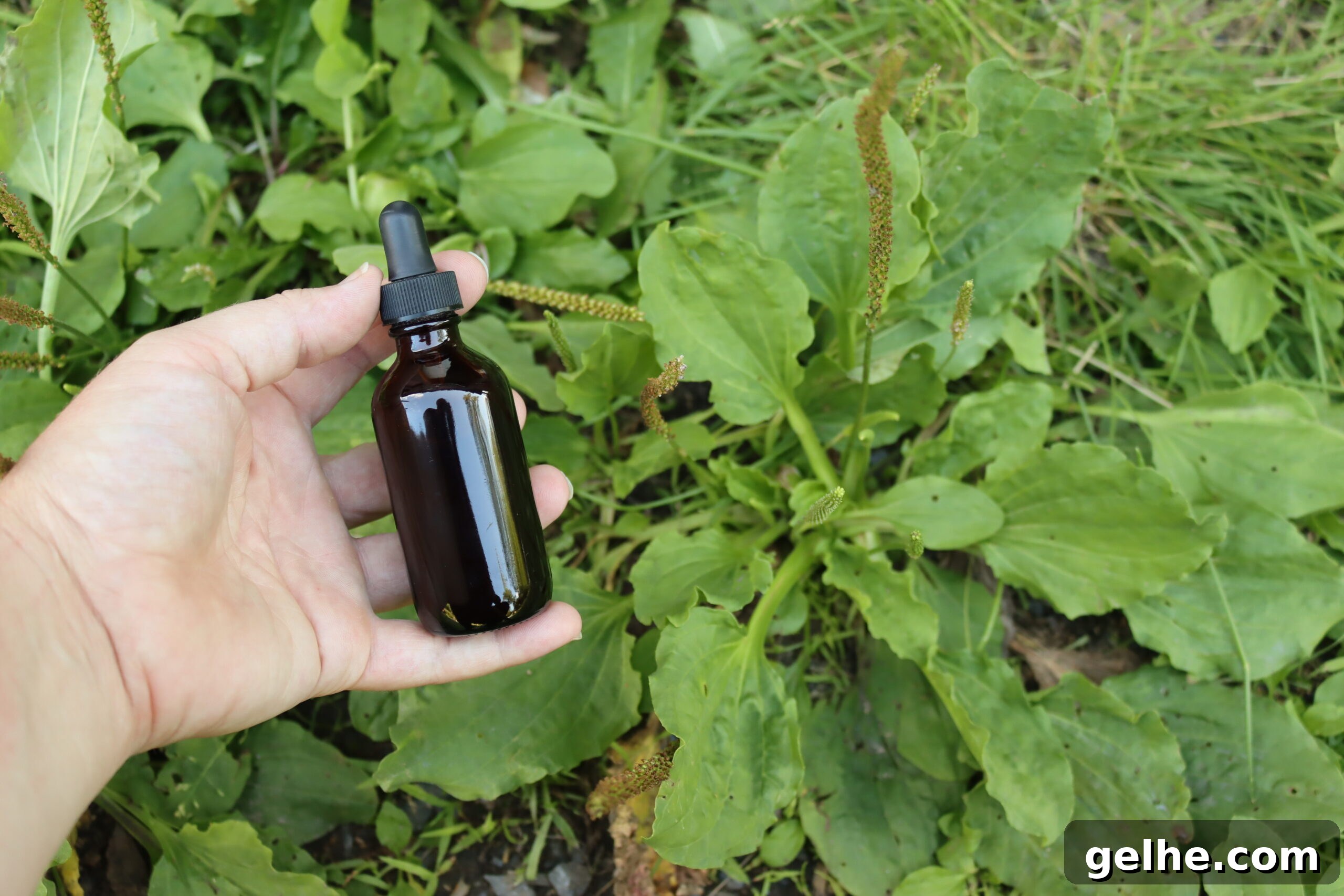
Like the fresh herb, plantain tincture is a soothing, anti-inflammatory remedy for bug bites, stings, and other skin irritations. It also offers internal benefits: supporting digestion, promoting wound healing, reducing inflammation, easing coughs, and relieving cramps. Easy to make and long-lasting, plantain tincture is a versatile item to keep in your home first-aid kit.
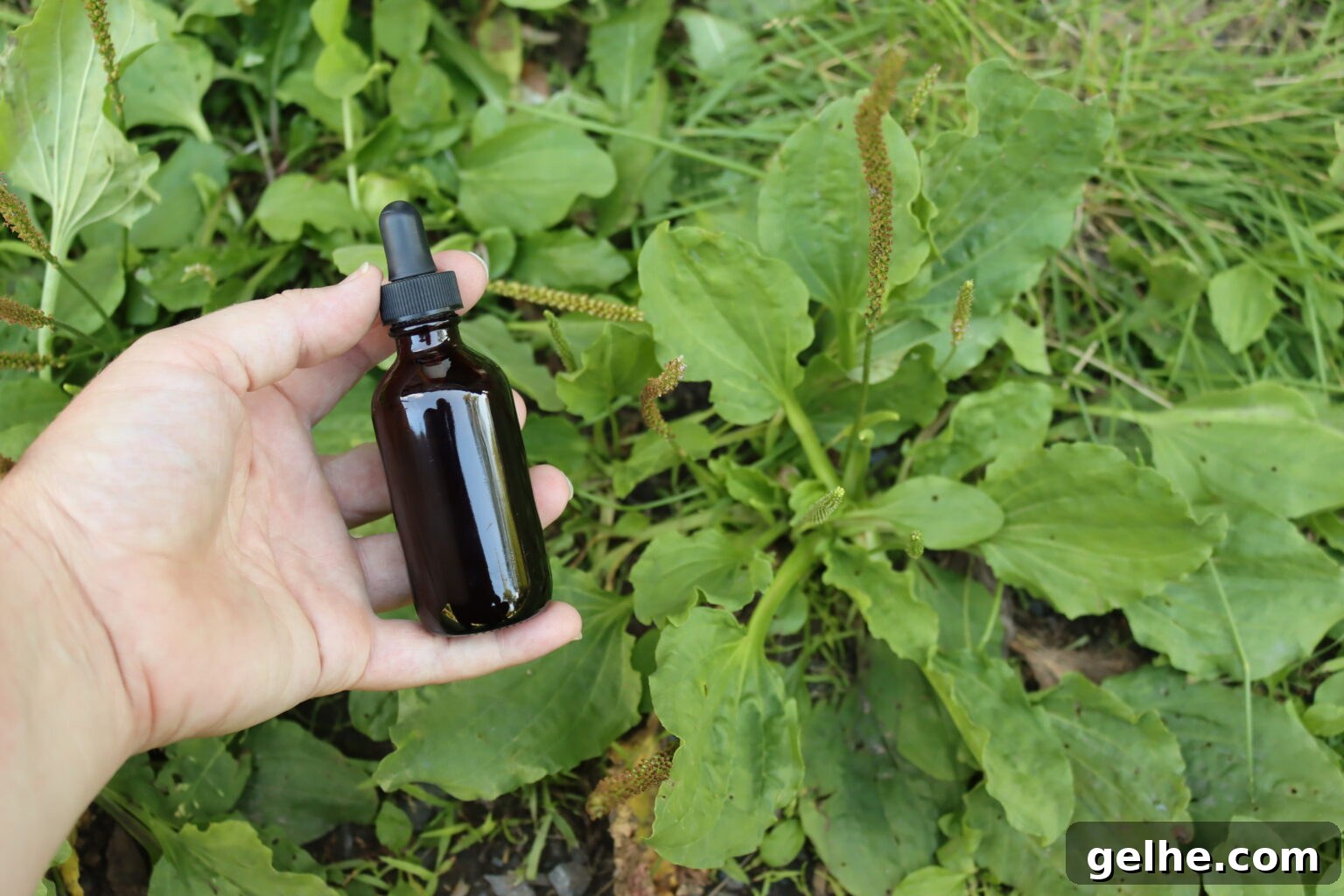
Plantain is well-known among hikers and homesteaders as a quick field remedy: chewing or crushing fresh leaves and applying them directly to the skin can relieve irritation. Making a plantain salve or tincture lets you preserve the herb for year-round use, even when fresh plantain isn’t available.
The tincture shares many topical benefits with the fresh plant but stores far longer and is convenient for internal use as well. As a tincture it’s particularly useful for its antispasmodic and soothing effects on cramps, diarrhea, and other stomach complaints.
One of plantain’s greatest advantages is how common it is. You’ll often find it in yards, parks, pastures, gardens, abandoned lots, and along roadsides. Avoid collecting plants from areas exposed to heavy traffic fumes, herbicides, or other contaminants.
There are over two hundred species in the Plantago genus. In the U.S., common species include American plantain (Plantago rugelii), California plantain (Plantago erecta), broadleaf plantain (Plantago major), and lanceleaf plantain (Plantago lanceolata). If you don’t have plantain nearby, it’s easy to cultivate from seed.
Plantain is also valuable for wildlife; some species serve as host plants for native butterfly caterpillars.
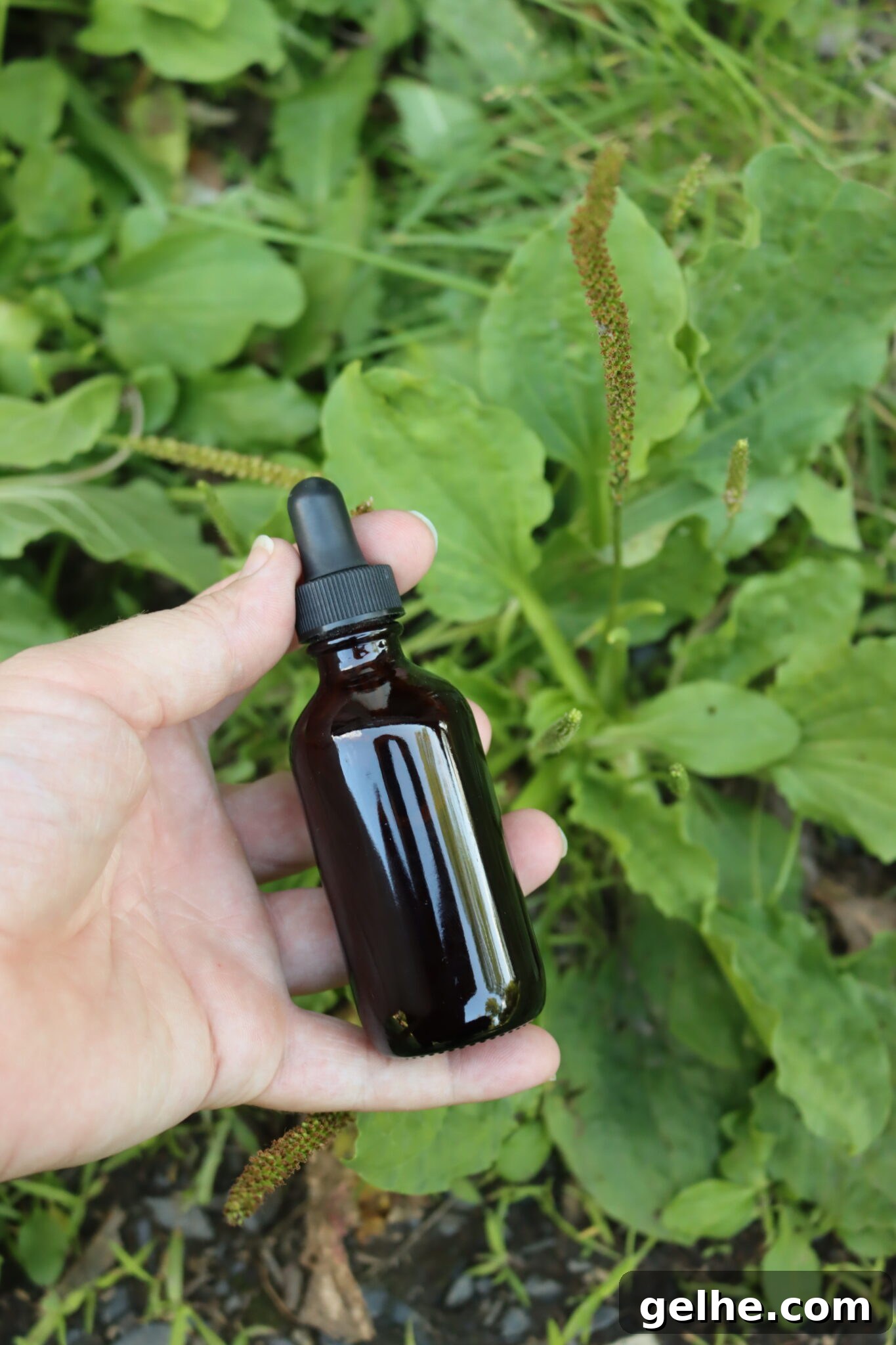
Always consult your doctor or a clinical herbalist before trying new herbal remedies. Allergic reactions, unintended effects, or interactions with other medications are possible. If foraging wild plantain, verify your identification with multiple reputable sources. The information here reflects personal experience and research and is not a substitute for professional medical advice.
Plantain Tincture Uses
Herbalists use plantain tincture topically and internally for many conditions.
Topical uses include:
- Soothing bug bites and stings
- Healing minor cuts and wounds
- Reducing inflammation
Internal uses include:
- Supporting digestive health
- Treating diarrhea and other digestive complaints
- Reducing inflammation and aiding wound recovery
- Soothing coughs and respiratory irritation
Research is also exploring potential anti-cancer properties, but current evidence is preliminary and not a reason to replace medical cancer treatment.
Benefits of Plantain Tincture
Plantain has a long history in folk medicine and has been widely used for treating skin injuries, bites, and stings. Animal and limited human studies support several traditional uses. Research indicates plantain extracts can speed wound closure, reduce ulcer area when combined with aloe, and protect stomach and liver tissue in animal models. Studies also suggest anti-inflammatory effects that may benefit digestive conditions like IBD.
For respiratory issues, animal research shows plantain preparations can reduce coughing, and plantain extracts are included in some commercial pediatric cough syrups. Plantain contains anti-inflammatory and antioxidant compounds such as flavonoids, terpenoids, pectin, iridoid glycosides, and tannins, which likely contribute to its healing effects.
Some laboratory and animal studies have examined anti-tumor activity, but these findings are preliminary. Plantain should never be used as a substitute for conventional cancer care.
Generally mild, plantain tincture can still cause allergic reactions in sensitive individuals. Topical sensitivity or gastrointestinal upset is possible when taken internally. Start with a small amount if you’ve never used plantain before.
Typical internal dosing: begin low, then ½ to 1 dropper full up to three times daily as needed. For topical use, spray or dab the tincture onto the affected area.
Parts Used for Tincture
The aerial parts of plantain—leaves, stems, flowers, and seeds—are all useful. Leaves are especially effective for skin applications, while seeds contribute to digestive benefits. You can make a multi-part tincture using the whole aerial plant or focus on specific parts depending on your intended use.
Prepare material by roughly chopping leaves, stems, and flowers and lightly crushing seeds to increase surface area. Dried plantain is also effective and convenient to store until you’re ready to tincture.
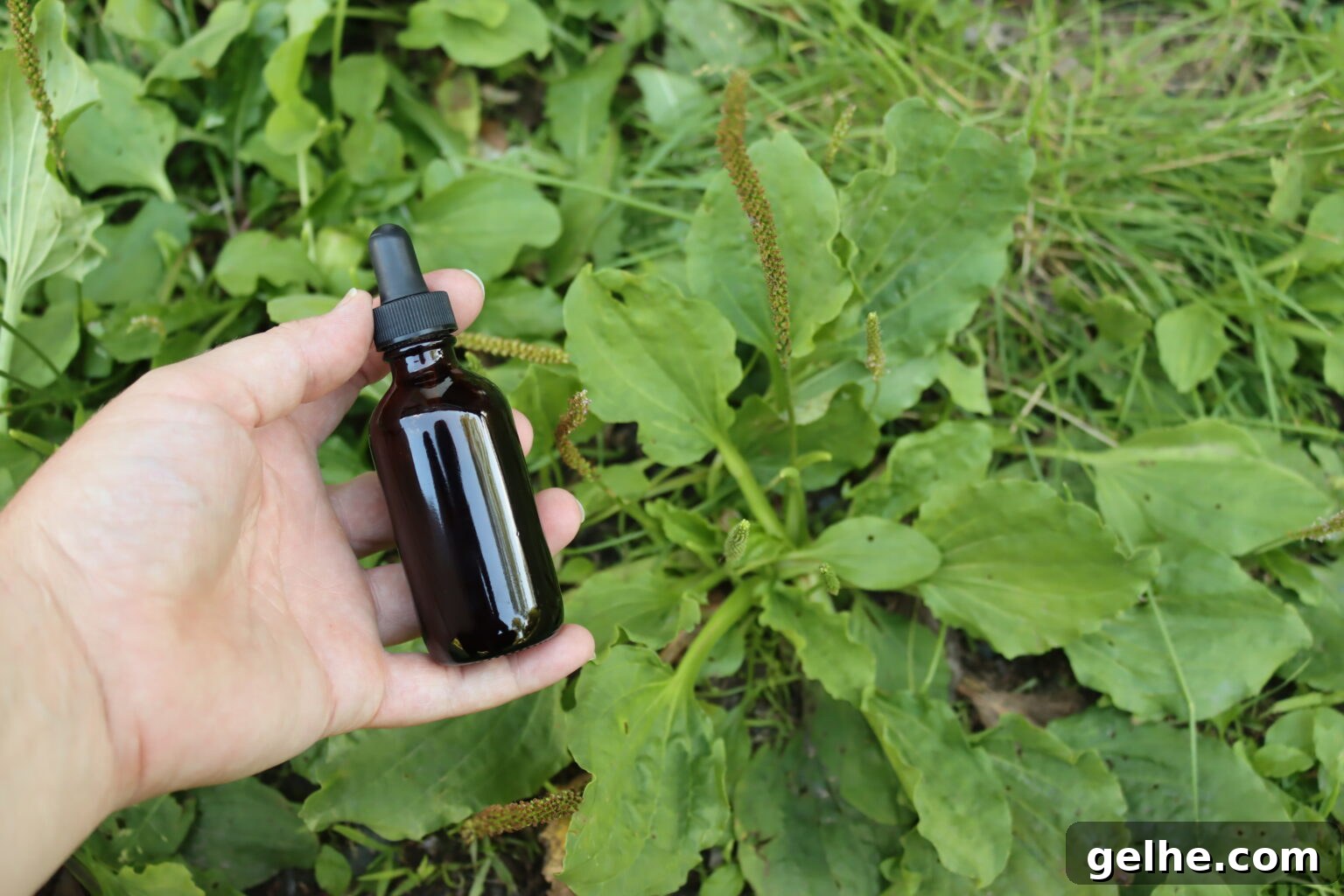
How to Make Plantain Tincture
Ingredients and equipment:
- Fresh or dried plantain
- Neutral spirit such as vodka (at least 40% ABV / 80 proof)
- One-pint mason jar with airtight lid (amber glass preferred)
- Funnel
- Cheesecloth or fine mesh sieve
- Amber glass tincture bottles with droppers or a small glass spray bottle for topical use
Instructions:
- Fill a clean jar about half full with fresh plantain or about two-thirds full with dried plantain.
- Pour alcohol over the plant material until it is completely submerged. Ensure coverage to prevent spoilage.
- Seal the jar and store it in a cool, dark place. Shake the jar gently every day if possible; a few times per week is acceptable.
- Let the mixture infuse for 4–6 weeks (many recipes recommend 6–8 weeks for a full extraction).
- When ready, line a funnel with cheesecloth and strain the tincture into clean amber bottles, pressing the plant material to extract as much liquid as possible.
- Label bottles with the herb name, date made, and suggested dosage. Store in a cool, dark place.
Notes on alcohol strength: dried herbs can be tinctured with lower-proof alcohol (around 30%), while fresh herbs typically require higher-proof spirits (60–95%) to account for plant moisture. Never use isopropyl or denatured alcohol for remedies meant for ingestion.
Plantain Tincture Dosage
For topical use, apply the tincture directly to affected skin as needed. For internal use, start with ½ to 1 dropper full up to three times daily. Consult a clinical herbalist or healthcare provider for specific dosing if you have medical concerns or are taking other medications.
Plantain Formulations
Plantain pairs well with other soothing, anti-inflammatory herbs. Topically, combine it with aloe vera, calendula, jewelweed, or turmeric. For digestive support, consider blends with ginger, chamomile, or self-heal. Tailor combinations to the condition you’re addressing and consult reliable resources or a herbalist for formulation guidance.
Plantain Tincture
Equipment
- Pint mason jar (wide mouth)
- Small tincture funnel
- Cheesecloth or fine mesh
- Amber glass tincture bottles with droppers
- Adhesive label or masking tape
Ingredients
- Plantain, fresh or dried
- Neutral spirit such as vodka (60 proof or higher recommended for preservation)
Instructions
- Fill a clean jar about three-quarters full with fresh plantain, or half-full with dried material.
- Pour alcohol over the plant until fully submerged.
- Seal the jar and shake gently. Store in a cool, dark place for 6–8 weeks, shaking periodically.
- When infusion is complete, strain through cheesecloth into dark bottles, pressing the plant material to extract liquid.
- Label bottles with name, date, and suggested dosage. Store out of direct light.
Notes
*Use 60-proof (30% ABV) or higher for preservation; fresh herbs may require higher-proof alcohol. Never use denatured or isopropyl alcohol for internal remedies.
Alcohol-free alternative
To make a glycerite (alcohol-free), cover dried plantain with a mixture of 3 parts vegetable glycerin to 1 part distilled water. For fresh herbs use pure glycerin. Shake daily and strain after the infusion period.
Yield
Yield varies: fresh plantain tends to give slightly more final liquid than the alcohol volume added, while dried plantain will absorb some alcohol. For a quart jar expect 2–3 cups of alcohol; for a pint jar 1–1.5 cups.
Disclaimer on Homemade Herbal Remedies
The following reflects personal experience and research. I am not a clinical herbalist. Use this information as a starting point and verify with multiple reputable sources. Herbal medicines can cause adverse reactions or interact with medications; consult your healthcare provider before trying new remedies. If you are serious about herbal medicine, consider formal training from reputable programs.
Herbal Tinctures
If you enjoy making tinctures, consider trying other herbs such as yarrow, chickweed, elderberry, dandelion, burdock, or echinacea to expand your home apothecary.
Herbal Medicine Making
Beyond tinctures, you can make herbal salves, infused oils, and fire cider as part of a practical home medicine cabinet.