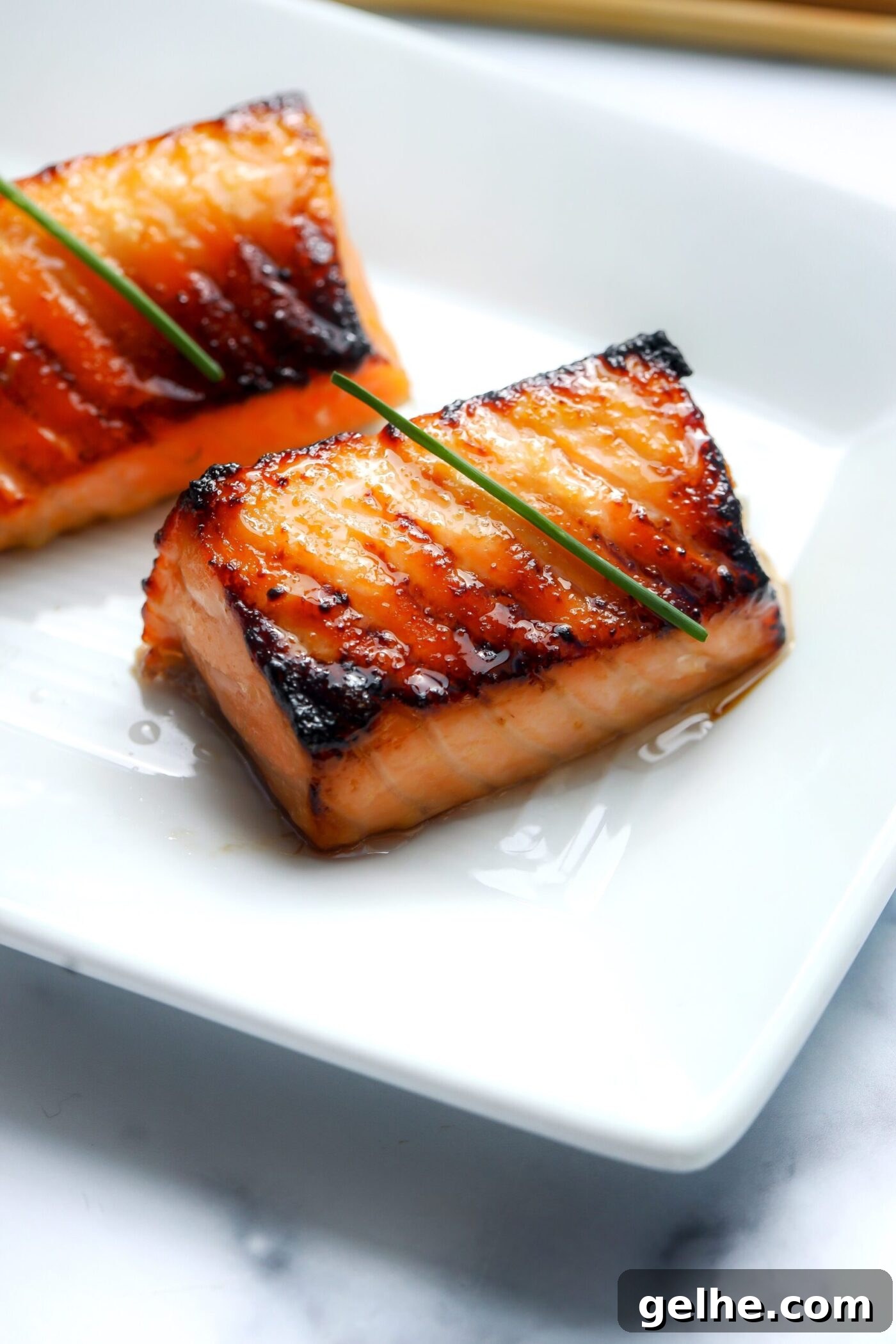
The first time I tried Nobu’s miso black cod was over ten years ago and it changed how I think about marinated fish. I’ve shared my original Miso Black Cod recipe with variations, and now I’ve adapted the miso marinade for salmon — this version might be my favorite. Bryan (my husband) isn’t usually a fan of cooked salmon, but he was obsessed with this, so consider this your sign to try it.
People often ask which miso paste I use; I prefer a mellow white miso for this recipe.
Table of Contents
- Why You’ll Love Miso Salmon (Nobu Copycat)
- Prep Like a Pro
- Substitutions
- Chef Nadia’s Tips
- The Perfect Pairings
- Miso Salmon (Nobu Copycat): Questions Answered
- Miso Salmon Nobu Copycat Recipe
Why You’ll Love Miso Salmon (Nobu Copycat)
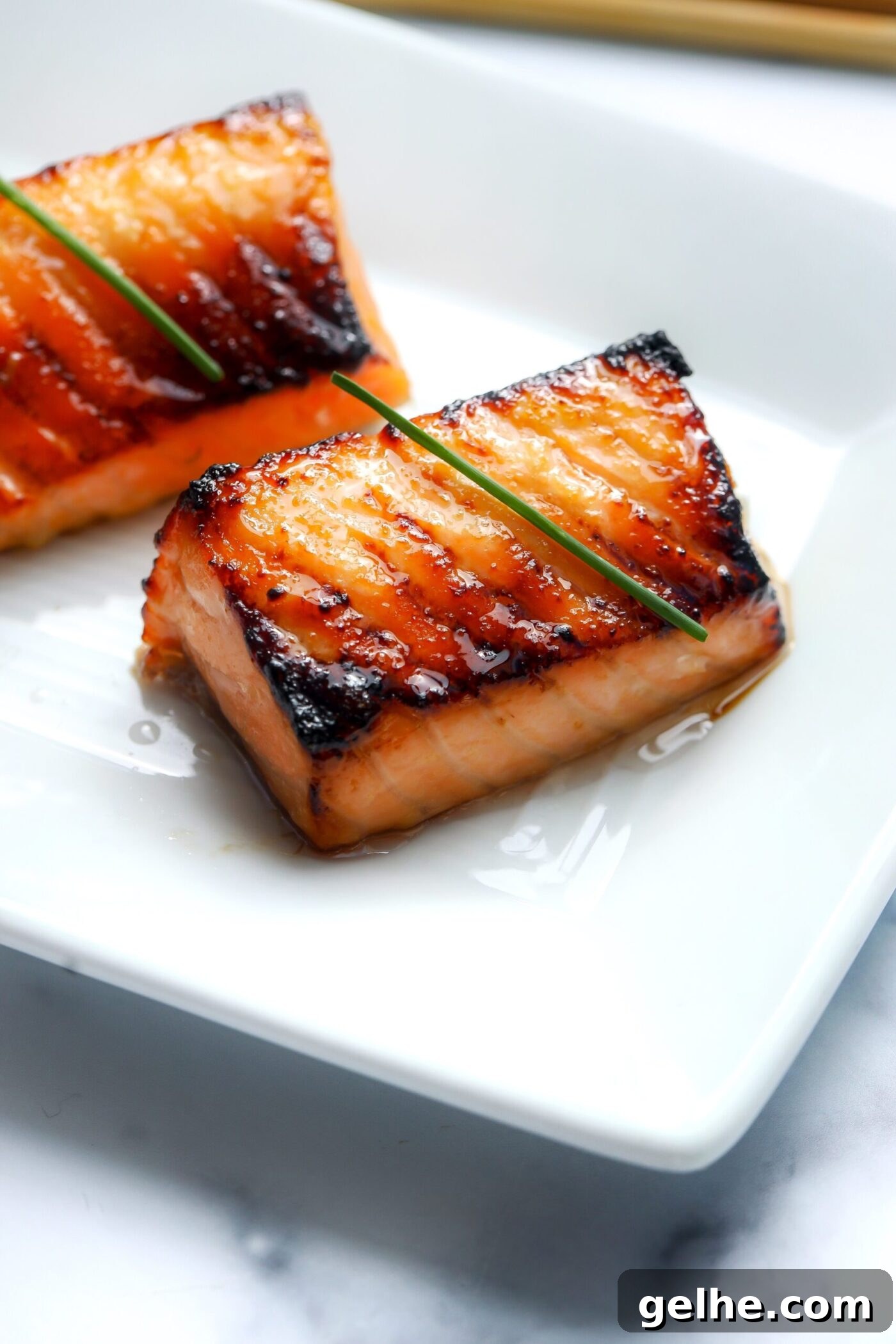
This miso marinade creates a layered, slightly sweet flavor that transforms the salmon. Broiling caramelizes the sugars in the marinade and gives the fish a golden, flavorful crust while keeping the interior flaky and tender. The marinating time is worth the wait — it deepens the taste and balances the richness of the salmon.
Prep Like a Pro
Use a non-reactive container: Glass or ceramic works best for marinating. Metal can react with the miso and alter the flavor.
Wrap tightly: Seal the dish well before refrigerating to prevent oxidation and keep flavors consistent.
Marinate: For best flavor, marinate the salmon for a full day. If that’s not possible, allow at least 4 hours.
Broil: Preheat your broiler to its highest setting (about 550°F if available) and watch closely — the sugars can caramelize quickly.
Check internal temperature: Place the salmon on the middle rack and broil for roughly 7 minutes, though ovens vary. The salmon should be opaque and flake easily. I recommend using an instant-read thermometer — aim for 135°F for medium-rare (my preference) or 145°F for well done.
Substitutions
- Swap salmon for another fish you like — miso works beautifully with firm, fatty fish such as black cod.
- To make this vegetarian, substitute thick slices of eggplant or meaty mushrooms for the salmon and marinate the same way.
Chef Nadia’s Tips
Marinate for a full day when possible; 24 hours gives the best balance of sweet and savory. If short on time, 4 hours is the minimum to develop flavor.
The Perfect Pairings
Drink: A bright, fresh cucumber martini complements the miso’s sweetness and the salmon’s richness.
Sides: Serve the miso salmon on a bed of steamed rice with a simple marinated cucumber salad or pickled vegetables for acidity and crunch.
Dessert: Finish with caramelized peaches or a light fruit-based dessert to balance the savory meal.
Cocktails
Cucumbertini
Mains
Syrian Rice
Sides
Cucumber Fennel Salad
Desserts
Amaretto Peaches
Miso Salmon (Nobu Copycat): Questions Answered
Yes. This marinade works well with other firm, fatty fish — black cod is a classic example.
I use a good-quality mirin for balance; any culinary mirin will work.
I recommend a mellow white miso for its sweet, delicate profile that complements the salmon.
Use eggplant or hearty mushrooms sliced thickly and marinated the same way; they take on the miso flavor nicely.
|
4 servings
Equipment
-
pot
-
non-reactive dish (glass or ceramic)
-
baking sheet
-
aluminum foil
-
broiler
-
Instant-read thermometer (highly recommended)
Ingredients
- ¼ cup mirin
- ¼ cup sake
- ⅓ cup white miso paste
- ⅓ cup cane sugar
- 2 lb salmon, deboned and cut into fillets
Instructions
-
Combine mirin and sake in a small pot and simmer for 3 minutes to cook off the alcohol.
-
Add the cane sugar and white miso, stir until smooth and heated through, but do not boil. Remove from heat and let the marinade cool to room temperature.
-
Place the salmon in a non-reactive dish and pour the cooled marinade over it, coating each piece well. Cover the dish tightly and refrigerate. Marinate at least 24 hours; 2–3 days will deepen the flavor.
-
When ready to cook, preheat your broiler to high (about 550°F if possible). Line a baking sheet with foil and arrange the marinated salmon on it.
-
Broil on the middle rack for about 7 minutes, watching closely so the top caramelizes but doesn’t burn. The salmon should be opaque and flake easily. Use an instant-read thermometer at the thickest part: 135°F for medium-rare or 145°F for well done.
Kitchen Cam
Nutrition
Nutrition information is automatically calculated and should be used as an approximation.