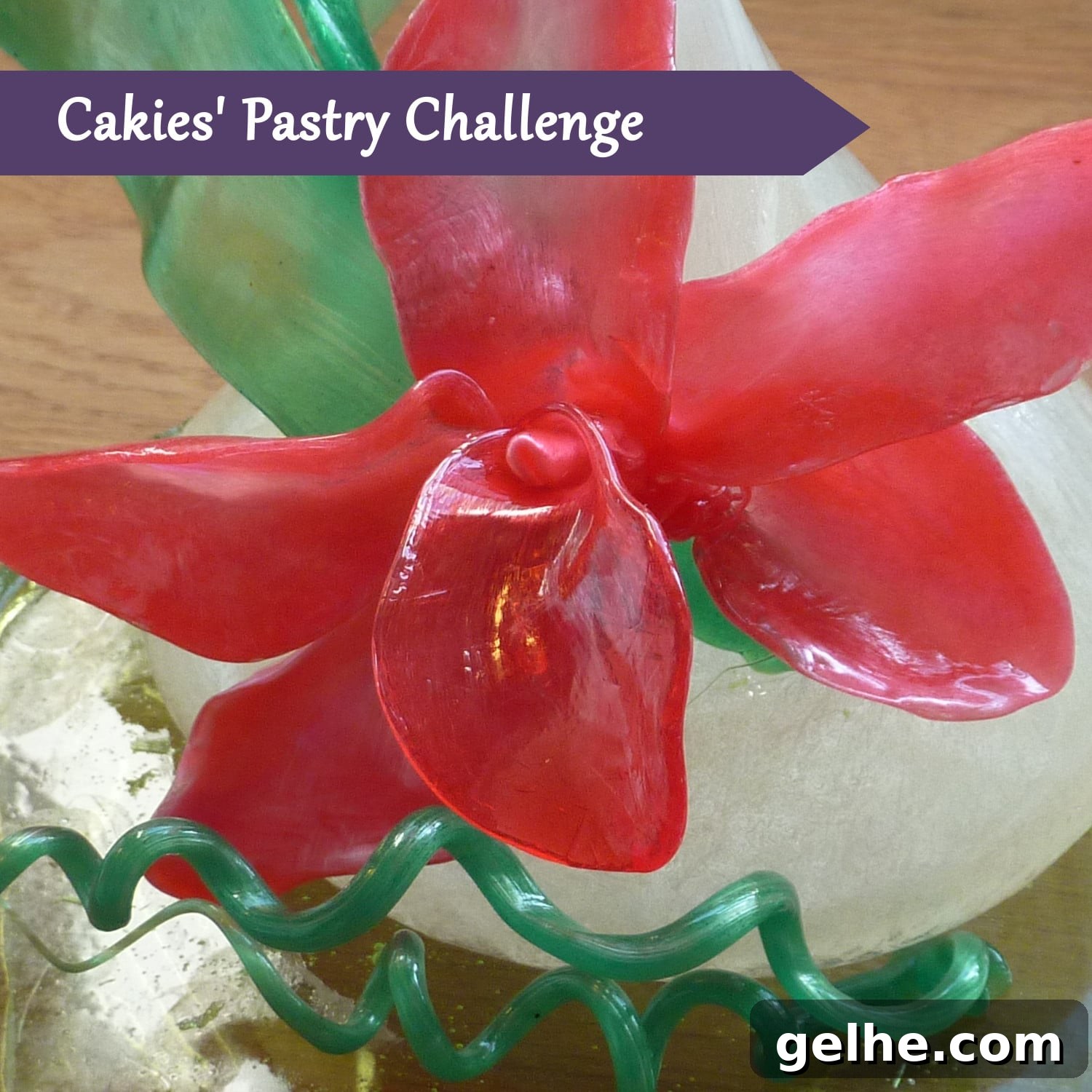
Day 26 marked the first day of the sixth module, a shift away from baking and toward focused technique work. This module emphasizes hands-on skill development rather than producing finished baked goods, and on this particular day we concentrated on working with sugar in its pulled and blown forms. The session introduced several practical skills: preparing sugar for pulling, maintaining temperature, shaping petals, and experimenting with blown-sugar forms.
Pulling sugar is an engaging but demanding craft. The sugar must remain warm and pliable throughout the process, so we worked under a heat lamp that kept the sugar at a workable temperature. That warm, steady heat is essential: if the sugar cools too quickly it becomes brittle and impossible to shape, while if it is too hot it becomes dangerously fluid. For safety, we wore heat-resistant gloves at all times. Even with gloves, the radiant warmth is noticeable, and learning to judge the sugar’s readiness by feel and sight is part of the skill.
The basic motion of pulled sugar involves repeatedly stretching and folding the sugar to create a glossy, elastic texture. Working the sugar in this way adds air and sheen, and it allows the material to take on delicate shapes. During the session we focused on making floral elements. The initial brief was to form a rose, and the instructor demonstrated petal formation, edge thinning, and how to assemble multiple petals into a convincing bloom. My first attempts produced petals that were a bit too long for a traditional rose, so I adapted the idea and created an orchid instead. That decision underscored an important point: working with sugar often requires on-the-spot adjustments, improvisation, and a willingness to let the material guide your design.
Beyond pulling, we also tried sugar blowing, which is a different approach to working with the same cooked sugar. Blowing sugar requires a steady hand and controlled breath to inflate a sugar bubble into shapes such as vases, bulbs, or hollow forms that can support decorative elements. For my piece I blew a small vase-like form, and then attached the orchid to it so the flower had both form and support. Combining pulled petals with a blown base adds contrast in texture and demonstrates how multiple sugar techniques can be integrated into a single composition.
Throughout the day we practiced temperature management, how to judge when the sugar is ready, and how to finish pieces cleanly. Finishing includes smoothing edges, securing petals, and ensuring that the final piece has structural stability. The instructors emphasized patience and timing: rushing a step or letting a component cool too much can lead to cracks or weak joins. They also covered practical tips for working hygienically and safely, such as keeping the workspace clear, using clean tools, and wearing appropriate protective gear.
One of the most rewarding aspects of the day was seeing how tactile and immediate sugar work is. The transformation of a glossy, ribbon-like material into a delicate flower in a matter of minutes is satisfying in a way that differs from baking. It’s a highly visual craft, and small refinements—adjusting a petal’s curve, angling a bloom, or smoothing a seam—make a big difference to the finished look. Working alongside classmates provided additional learning: observing different approaches, exchanging tips on shaping and timing, and comparing outcomes helped accelerate skill development.
By the end of the session I had a stronger sense of how pulled and blown sugar behave, and I felt more confident about attempting more complex pieces in the future. The day combined technical instruction with hands-on practice, and it reinforced how much technique and temperament matter when working with sugar. Overall, it was an enjoyable and informative session that left me eager to continue refining these decorative skills.