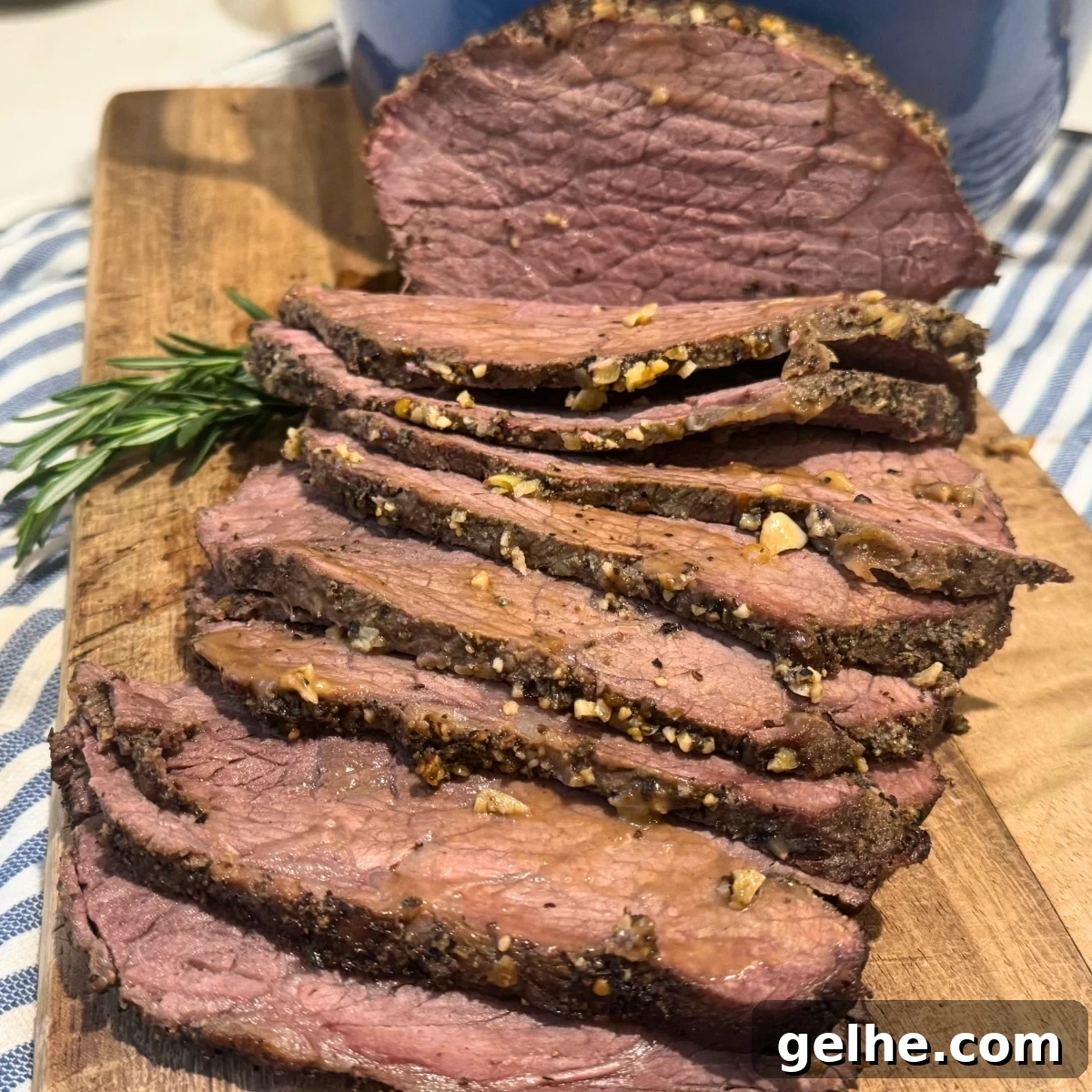
Looking for an easy and delicious way to make a tender roast beef? This rump roast recipe turns a naturally lean, tougher cut into succulent, family-friendly roast beef that even picky eaters will enjoy.
Tender Rump Roast
Rump roast is an economical cut because it’s relatively lean and naturally firmer than more marbled roasts. It has more connective tissue and less intramuscular fat, but with the right technique it becomes tender and flavorful.
To transform rump roast into a tender centerpiece, we season it, sear it quickly over high heat, then finish it slowly in a low oven. Searing caramelizes the surface, creating a rich crust that adds texture and concentrates flavor, while the low-and-slow finish melts connective tissue and keeps the interior juicy.
With a few simple pantry ingredients and straightforward steps, this recipe produces a roast beef that’s perfect for special dinners, sandwiches, or a comforting family meal.
This roast works beautifully sliced thin for sandwiches or plated as a main course with pan juices or au jus. If you prefer other methods, a slow cooker or Instant Pot can also yield tender results, but this recipe focuses on stovetop searing and oven roasting for maximum flavor and texture.
Key Ingredients
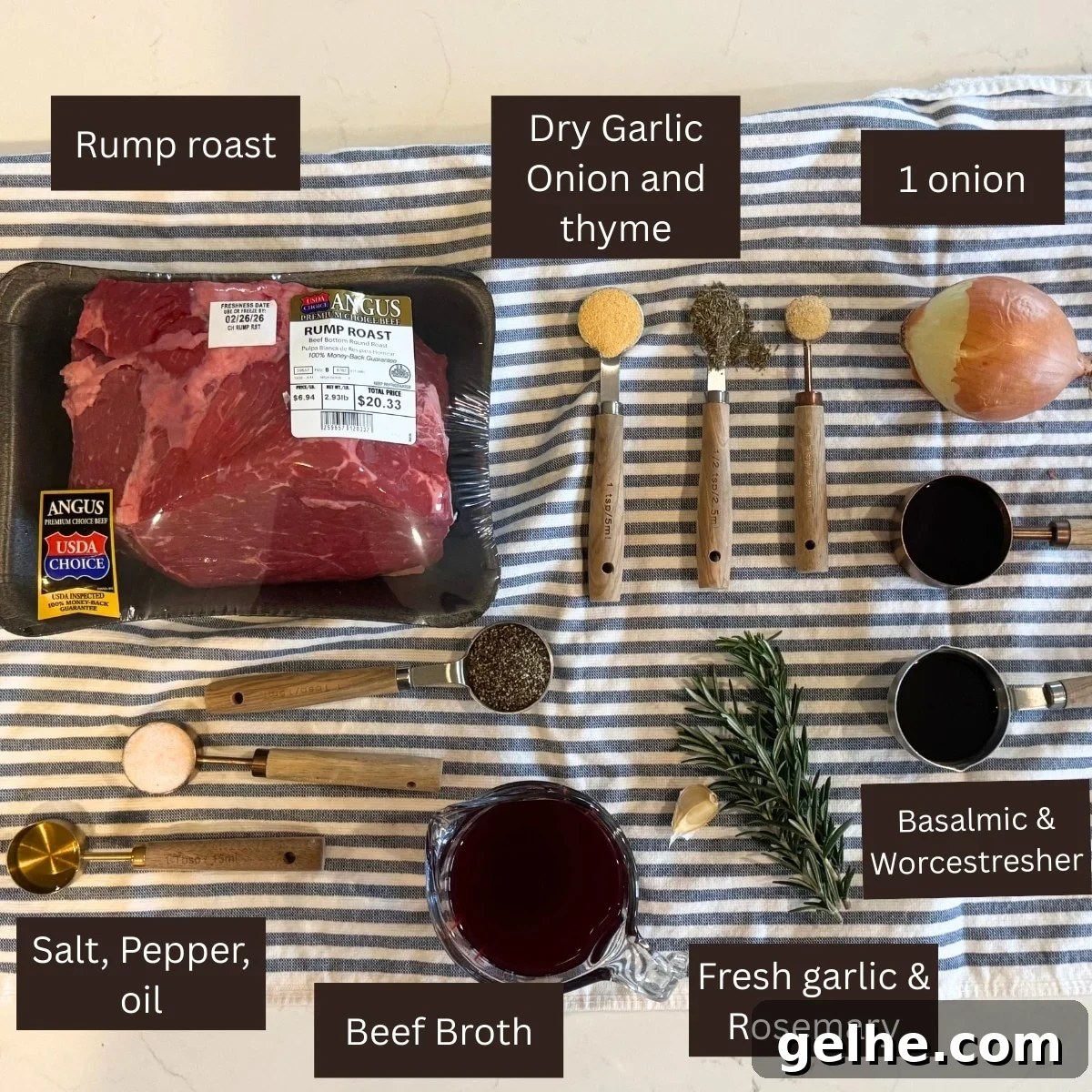
A simple list of staples is all you need to highlight the beef’s flavor and produce a tender roast.
Rump Roast: The main ingredient. When cooked properly, this economical cut becomes tender and satisfying.
Olive Oil: Used for searing to develop a deeply browned crust that locks in juices.
Garlic Cloves: Roasted alongside the meat, garlic adds aromatic sweetness and balances richness.
Beef Broth: Provides a savory cooking liquid that infuses the meat and keeps it moist.
Worcestershire Sauce: Adds umami and a touch of tang that deepens the overall flavor.
Fresh Rosemary & Thyme (Optional): Fresh herbs lend a fragrant note that complements beef nicely.
Balsamic Vinegar (Optional): A splash brightens and balances the savory elements with a subtle sweetness.
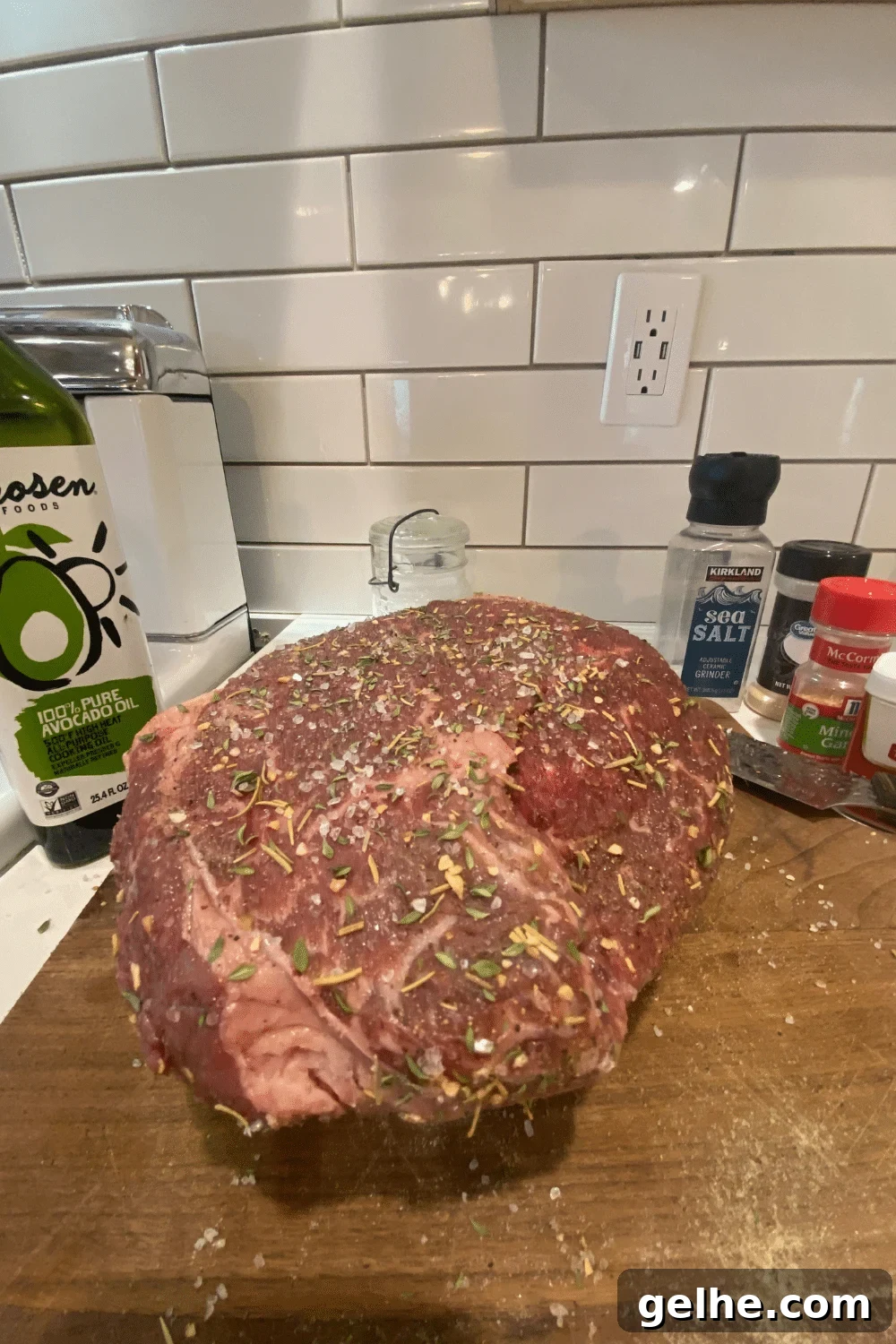
My Tips & Tricks
Serious Searing: Heat your pan well before adding oil and the roast. A deep brown crust on all sides adds flavor and helps retain juices. Don’t overcrowd the pan—sear in batches if necessary.
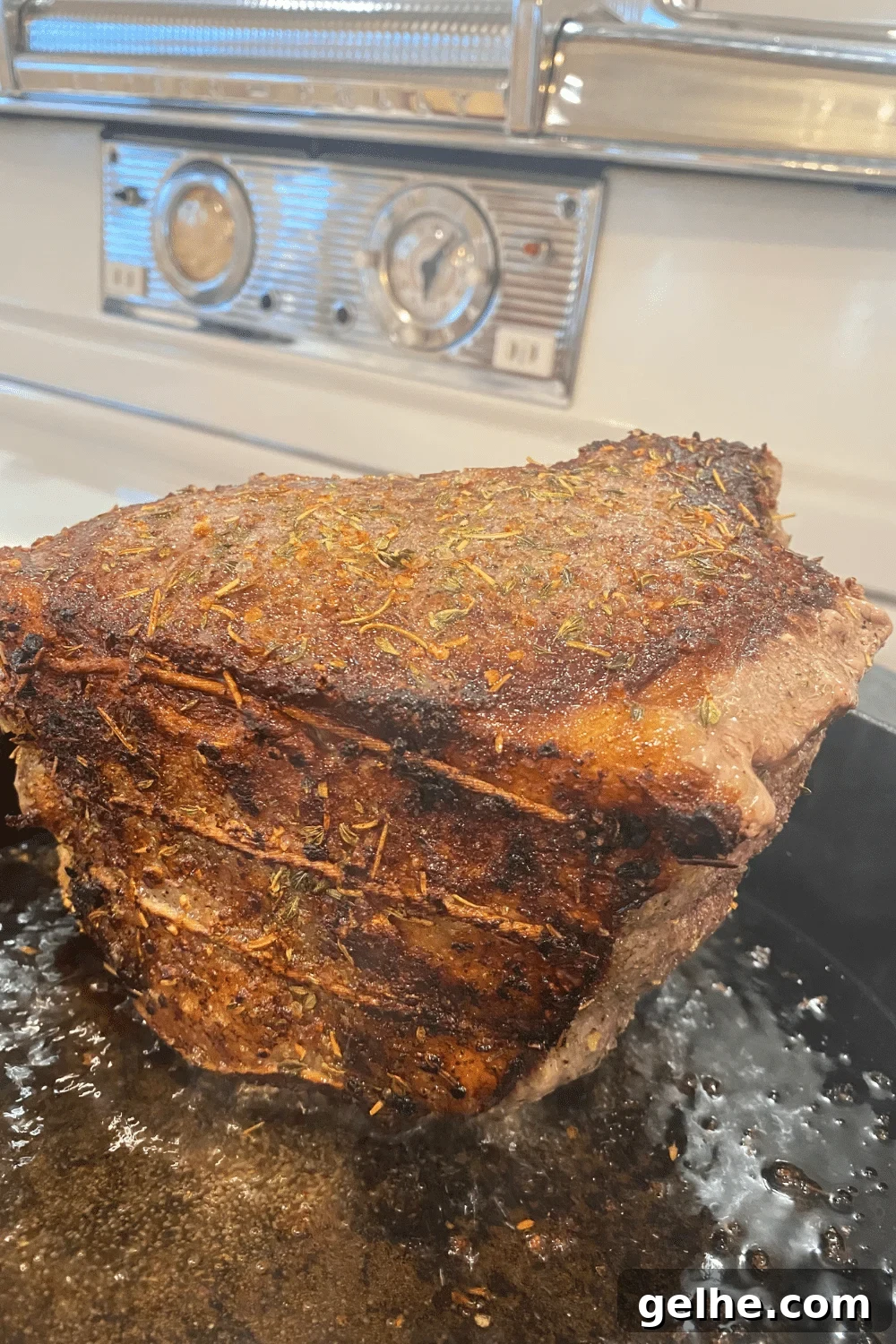
Deglaze for Extra Flavor: After searing, add a splash of beef broth or red wine to the hot pan and scrape up browned bits. Pour that into your roasting pan to enrich the pan juices and sauce.
Don’t Peek Too Often: Avoid opening the oven repeatedly; each peek drops the oven temperature and can extend cooking time. Rely on a meat thermometer for accurate timing.
Resting is Essential: Let the roast rest 20–30 minutes tented with foil before slicing. Resting allows juices to redistribute so slices remain moist instead of pooling on the cutting board.
Slice Against the Grain: Cutting across the muscle fibers shortens them, making each bite more tender. Slice thin for best texture.
Pairings
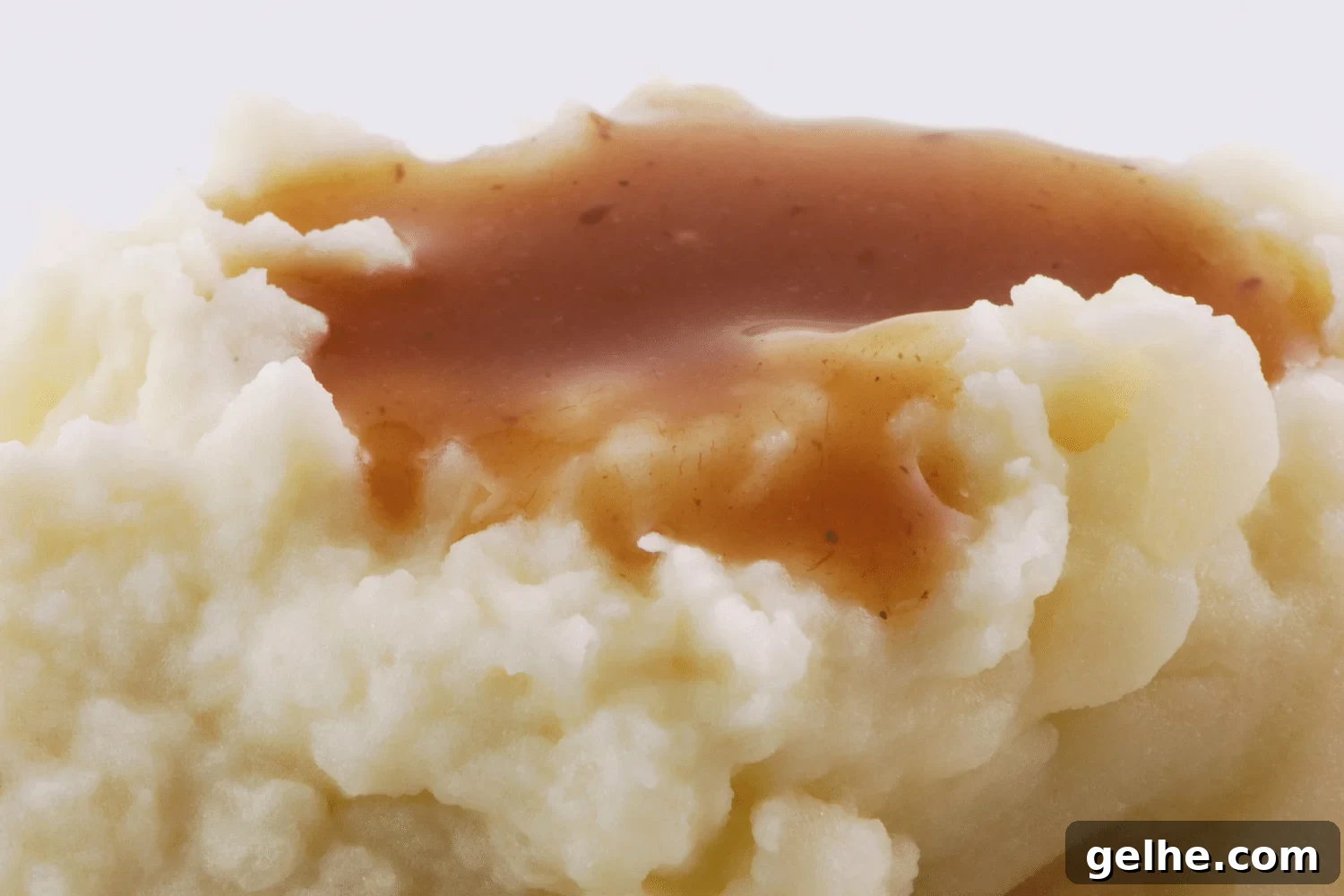
Rump roast makes a classic roast beef for Sunday dinners or holiday meals. Serve it with pan drippings or au jus and creamy mashed potatoes with homemade gravy made from the roasting pan drippings. Soft dinner rolls and a crisp green salad or a seasonal fruit salad are excellent complements.
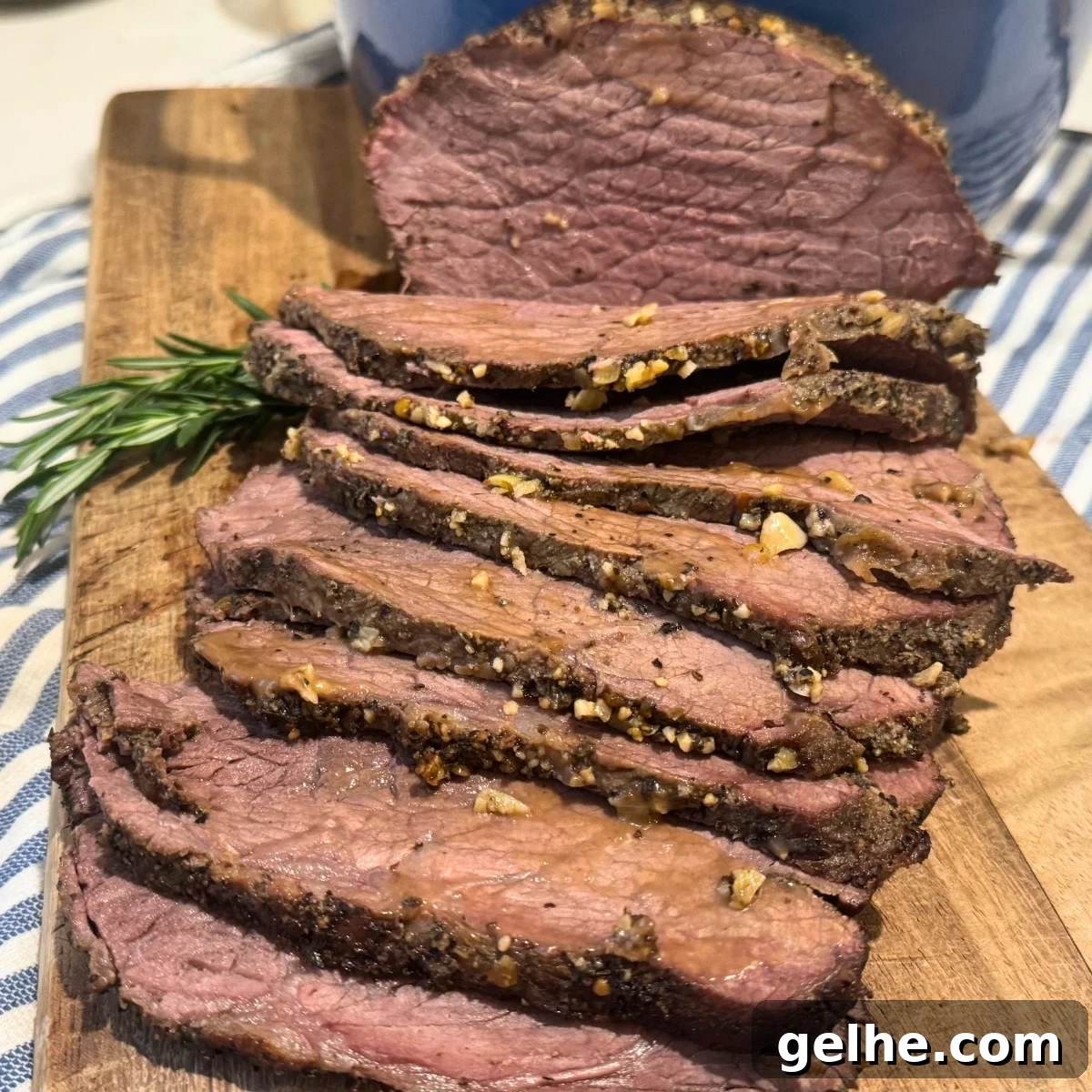
The Rump Roast Secret: Medium-Rare or Cook It Long
Rump roast can be tricky because of its lean profile. The key is the internal temperature. There are two reliable approaches:
For deli-style thin slices: Remove the roast at medium-rare to medium. Aim for 130–135°F for medium-rare or 140–145°F for medium. The roast will relax a bit while resting.
For fall-apart, shreddable meat: Cook to a much higher internal temperature—around 200–205°F—until the connective tissue breaks down and the meat becomes fork-tender. If you reach around 160°F and the meat feels tight, it simply needs more time to reach the shredding stage.
Please review the recipe!
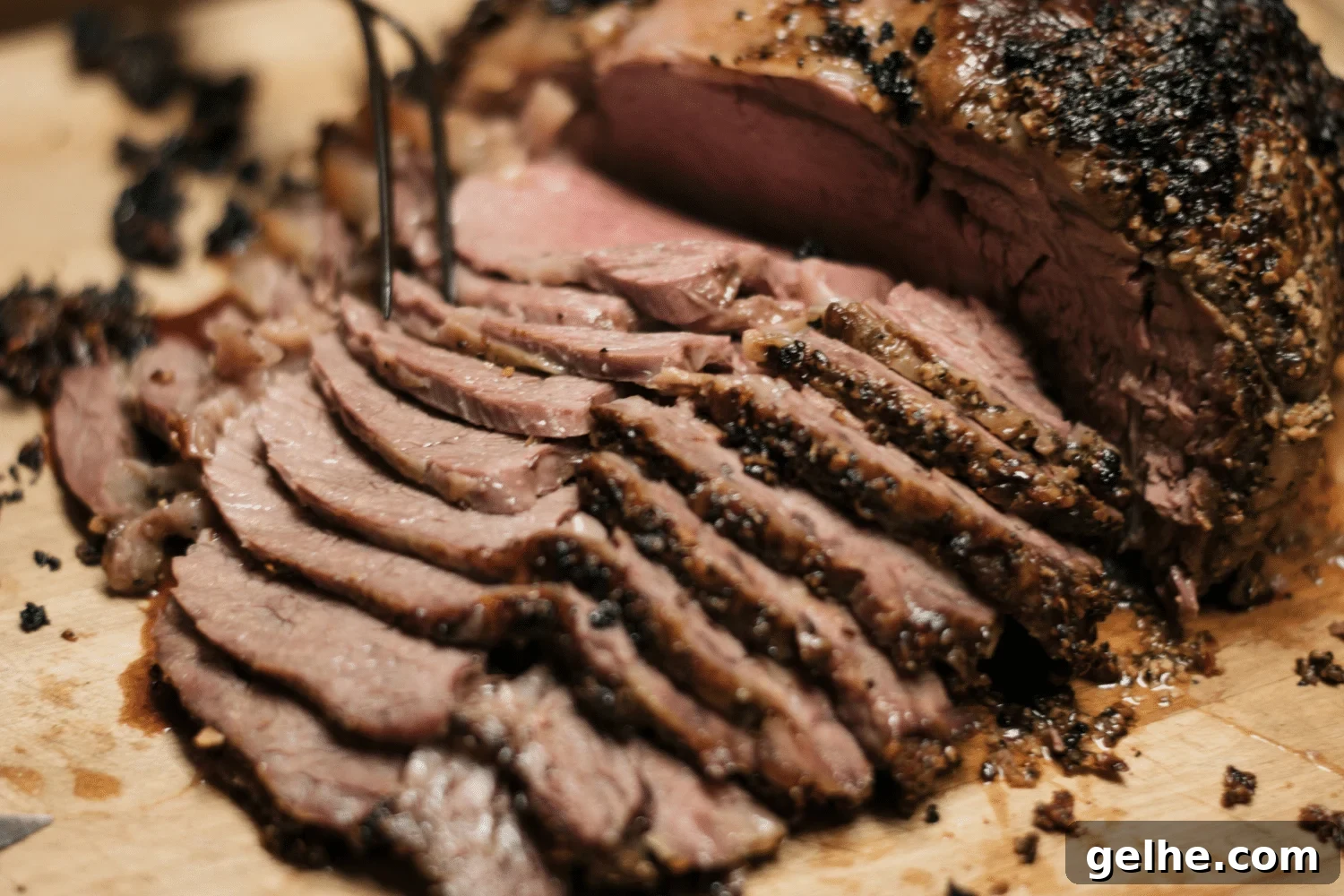
Tender Rump Roast Recipe with Garlic & Herbs
Ingredients
- 4-5 pound beef rump roast, boneless
- 2 tbsp Olive oil or Avocado Oil for searing
- 1 tbsp Salt
- 2 teaspoons garlic powder
- 2 teaspoons onion powder
- 1 tbsp Ground Black Pepper
- 1 tablespoon thyme dried, optional
- 1 tbsp fresh rosemary, minced optional for garnish
- 1 bulb of fresh garlic peeled and chopped
- 1 cup beef broth or water
- 1 tbsp Worcestershire sauce
- 2 tbsp balsamic vinegar optional
- 1 onion chopped and caramelized
Instructions
-
Remove the meat from the refrigerator about 20 minutes before cooking to take the chill off for more even cooking.
-
Preheat the oven to 450°F.
-
Trim excess fat with a sharp knife as desired.
-
Rub the roast with oil to help the seasonings adhere.
-
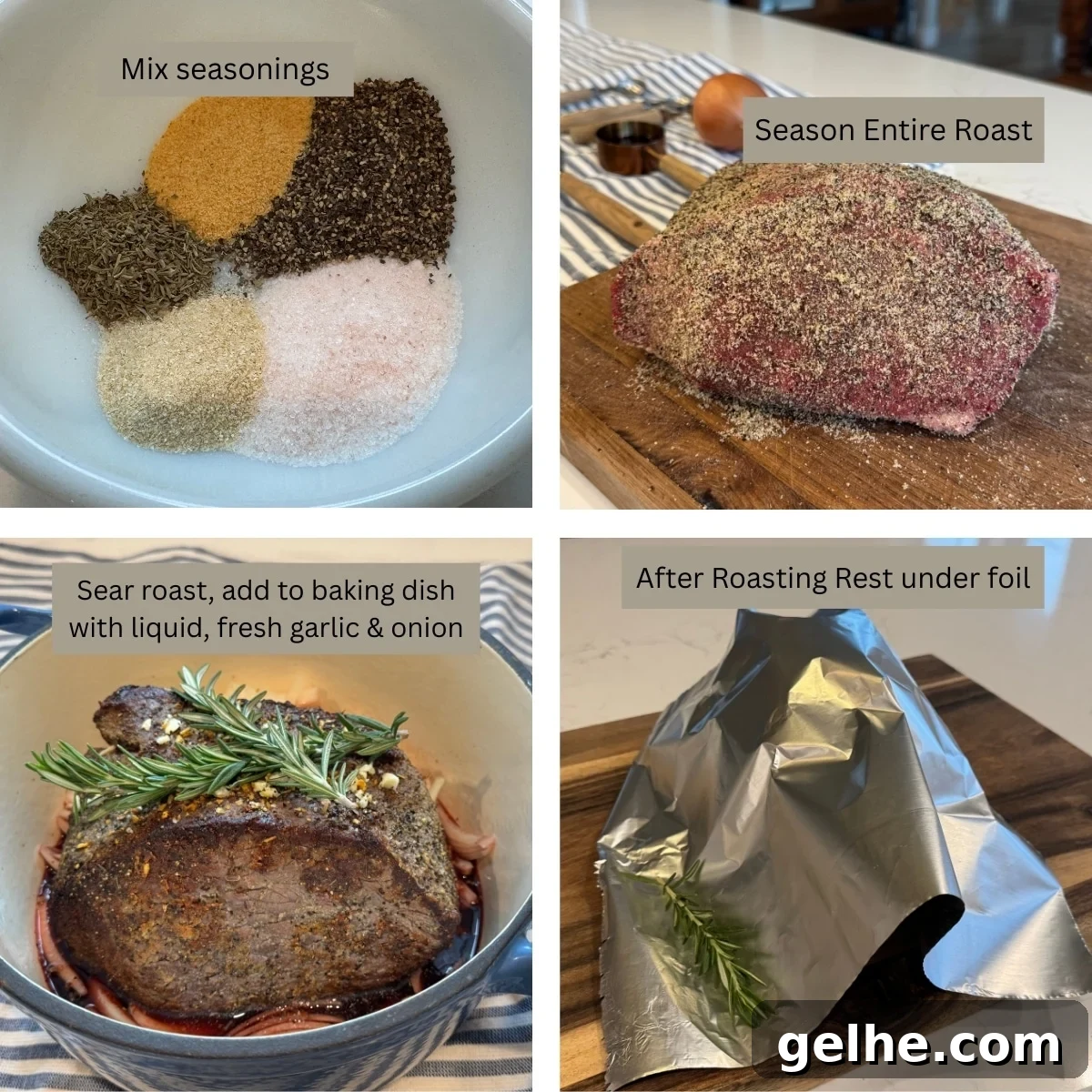
Mix salt, pepper, garlic powder, onion powder, thyme and rosemary (if using) in a small bowl.
-
Rub the seasoning all over the roast.
Searing
-
Heat 2 tbsp oil in a skillet, cast-iron pan, or Dutch oven until very hot.
-
Sear the roast over medium-high heat on all sides until well browned and a crust forms.
-
Add sliced onion and 1 tbsp oil to your Dutch oven or pan over medium heat and cook until onions start to caramelize.
-
Place the seared roast in a roasting pan, fat side up. If you seared in a skillet, transfer the roast to the roasting pan.
-
Pour 1 cup beef broth (or water), 1 tbsp Worcestershire sauce and balsamic vinegar (if using) into the bottom of the roasting pan.
-
Scatter minced garlic over the roast.
-
Place the roast in the preheated 450°F oven uncovered. (If you seared in a Dutch oven, assemble ingredients and place the pot directly in the oven.)
-
Roast 15 minutes at 450°F.
-
Lower the oven to 225°F and slow roast uncovered to desired doneness. It typically takes about an hour to reach 125°F internal temperature.
Internal temperature guide: pull at 125°F for rare (finishes ~135°F while resting). Pull at 135°F for medium (finishes ~145°F after resting). For medium-well, pull at 145°F (finishes ~155°F after resting).
-
Remove the roast from the oven, transfer to a cutting board, tent with foil and rest at least 20 minutes. Slice thinly against the grain before serving.
Video
Notes
- Every oven and roast shape differ, so timing will vary. Check internal temperature regularly after the first 45 minutes to avoid over- or under-cooking.
Use a meat thermometer rather than relying solely on time. Refer to the internal temperature guidance above for the result you want.
- Bring the roast to near room temperature before searing for more even cooking.
- Let the roast rest for 20–30 minutes after cooking so juices redistribute before slicing.
- Store leftovers in an airtight container in the refrigerator for 4–5 days.