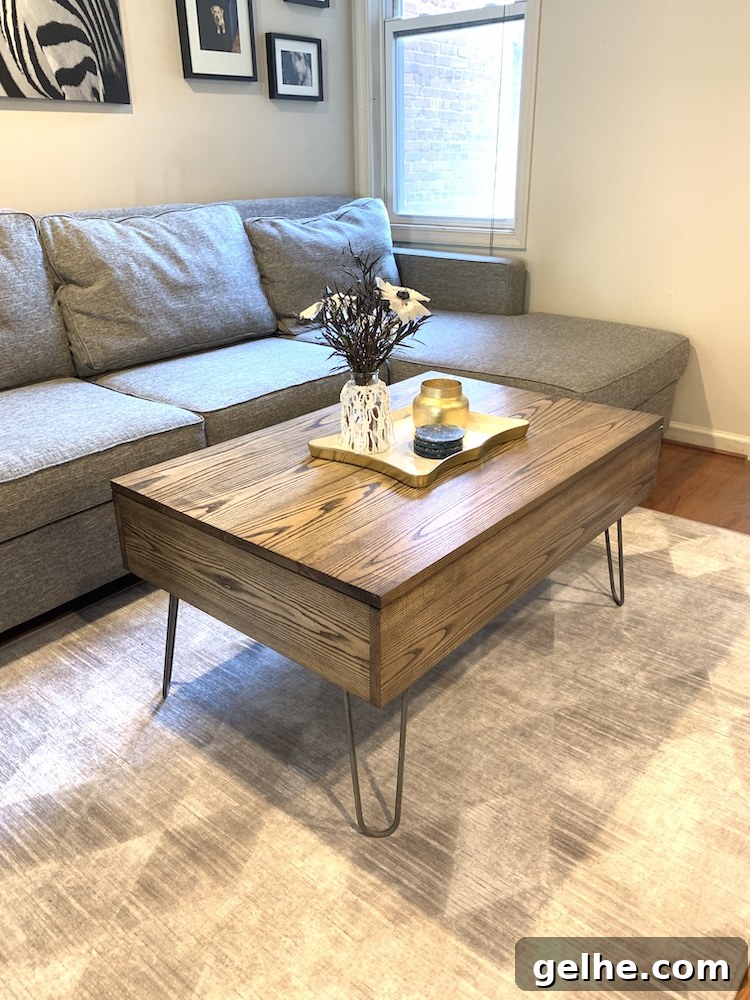
This DIY lift-top coffee table can be made to your preferred dimensions and will become a striking focal point in your living room.
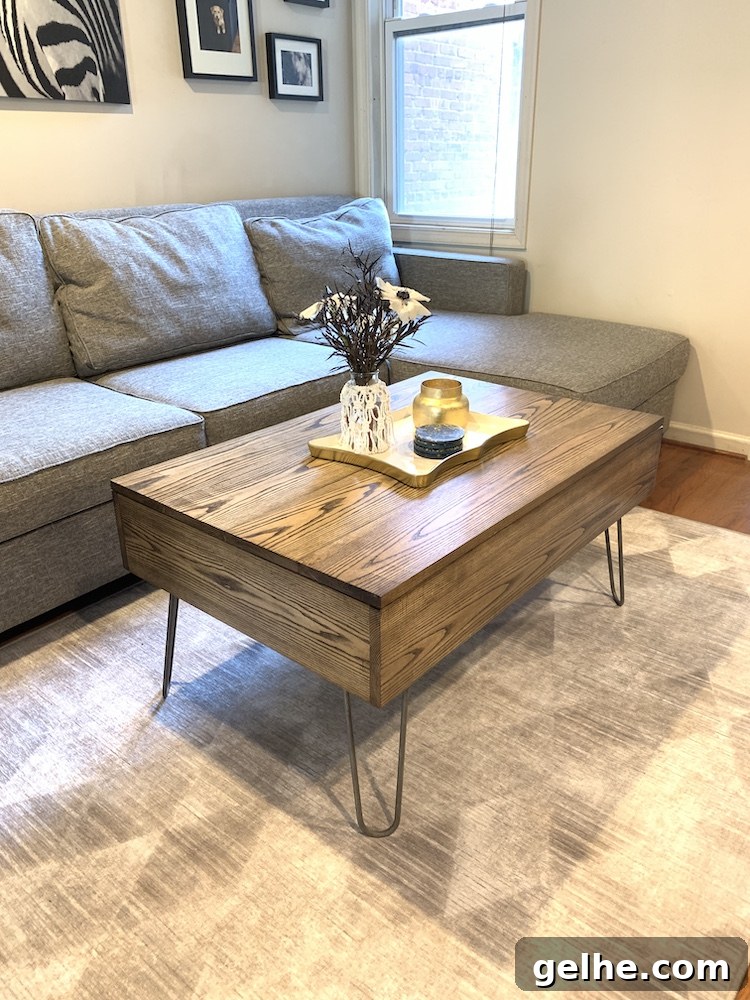
A year ago a colleague asked me to build her a lift-top coffee table to replace an older model. She liked the modern look of a table she had seen and wanted something similar. I agreed, though I was nervous—I had mostly built farmhouse-style pieces up to that point and this would require a fresh design from scratch. There were challenges, but the project was rewarding and the final result exceeded my expectations.
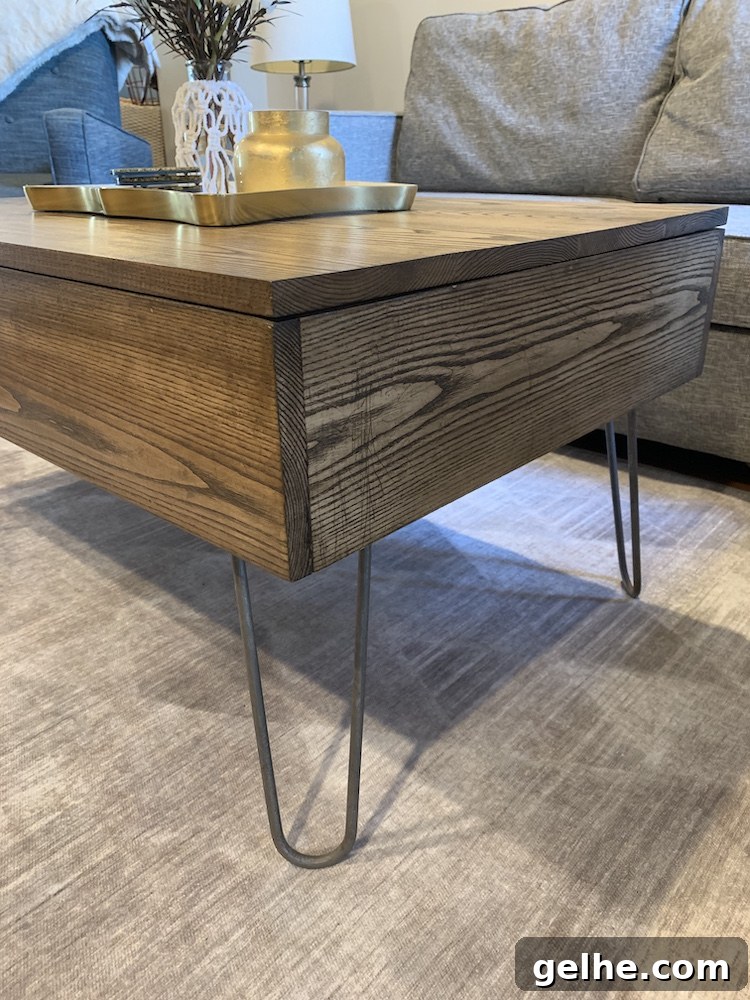
I chose ash for this build because it takes stain beautifully and is a reliable hardwood. You don’t have to use ash, but I recommend using a hardwood for durability and a refined finish. For this particular table I reused the lift-top mechanism from the old table, which simplified the process. If you don’t have a mechanism to reuse, you can purchase one designed for lift-top coffee tables. Below is a clear shopping list, tools list, cut list, and step-by-step instructions so you can build your own.
DIY Lift Top Coffee Table Shopping List
- 4 boards of 1×8″ ash @ 8 ft
- 1 sheet 3/4″ plywood (4×4 ft)
- Wood glue
- 1¼” pocket-hole screws
- 8″ hairpin legs (or legs of your choice)
- Lift-top table mechanism (if you don’t have one to reuse)
- Stain or paint
- Polyurethane
Tools
- Table saw
- Miter saw
- Planer (if your boards need thicknessing)
- Orbital or hand sander and sandpaper
- Kreg Jig (for pocket holes)
- Clamps
- Paint brush or foam applicator
Cut List
- Six pieces 1×8 @ 39″ (ash)
- Four pieces 1×8 @ 24″ (ash)
- One plywood panel 37½” x 24″
How to Make a DIY Lift Top Coffee Table
Step 1: Make all cuts from the cut list. If your ash boards are thicker than 3/4″, run them through a planer until they reach the desired thickness.
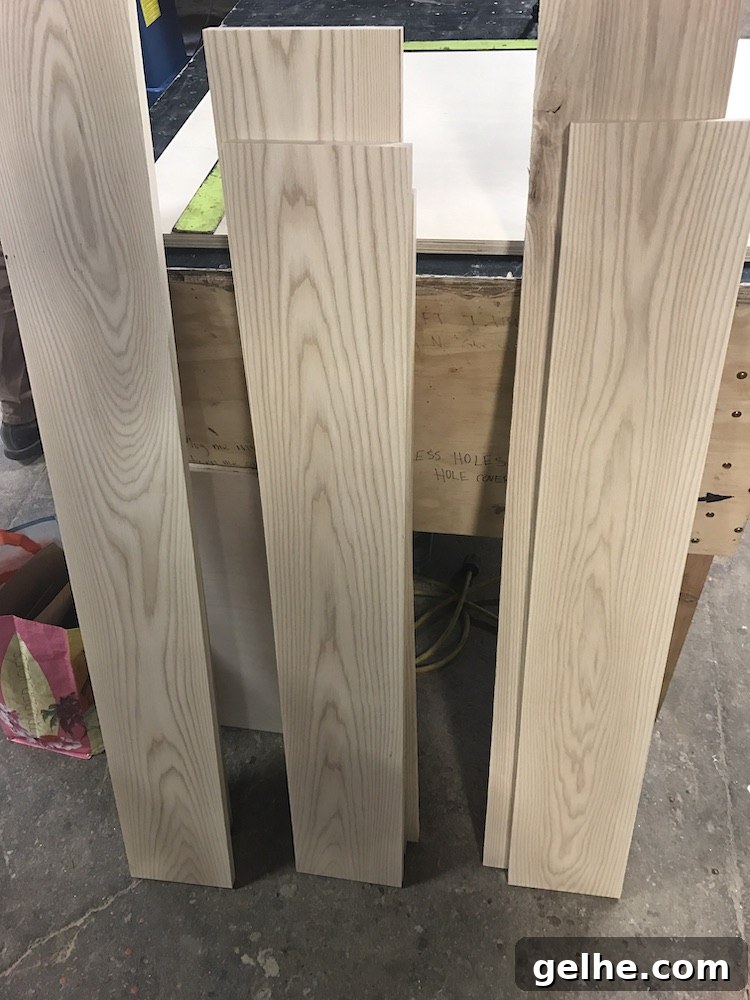
Step 2: On the table saw, rip four of the 39″ 1×8 pieces to a width of 6⅜”. Rip the remaining two 39″ pieces to 7¼” wide.
Step 3: Use a Kreg Jig to drill pocket holes in each end of the two 1×8 @ 24″ pieces. Also drill pocket holes in the bottom of the plywood panel for assembly.
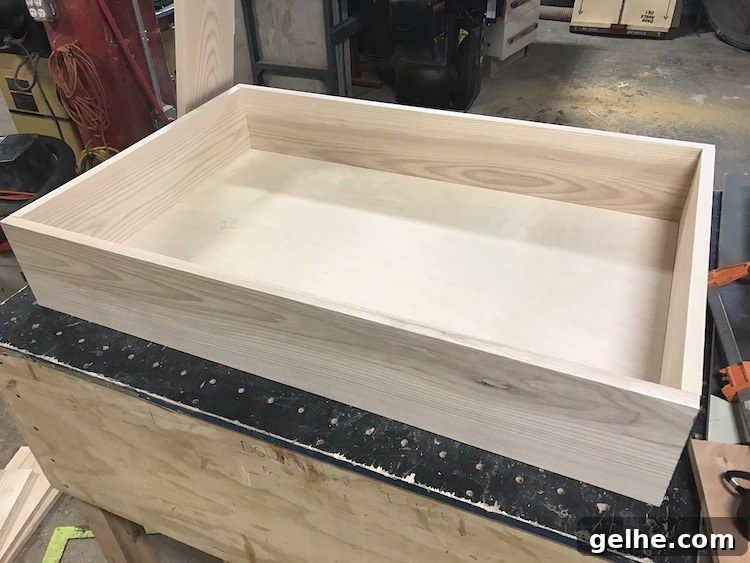
Step 4: Position the two 39″ 1×8 pieces ripped to 7¼” and the two 1×8 @ 24″ pieces around the plywood so the plywood sits flush as the bottom. Apply glue, join with pocket-hole screws, and clamp for at least 30 minutes to let the glue set.
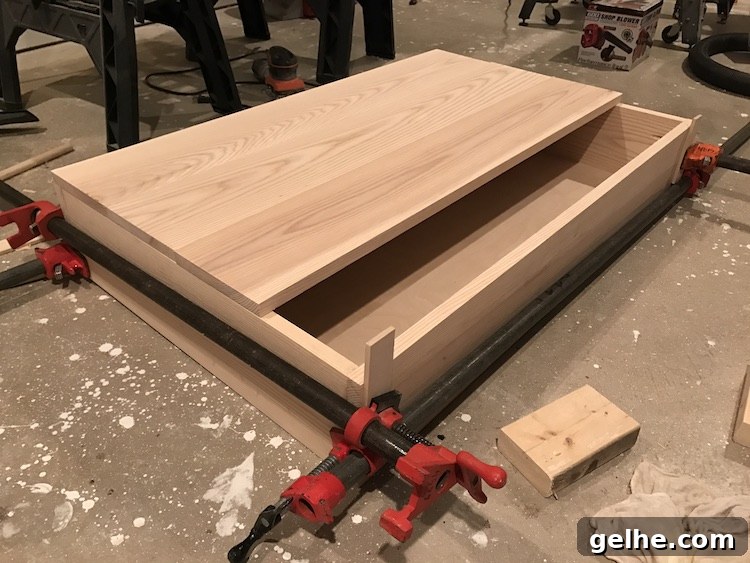
Step 5: Lay the four 39″ pieces ripped to 6⅜” on top of the assembled side panels to check fit for the table top. Trim any piece on the table saw if necessary so the top fits snugly.
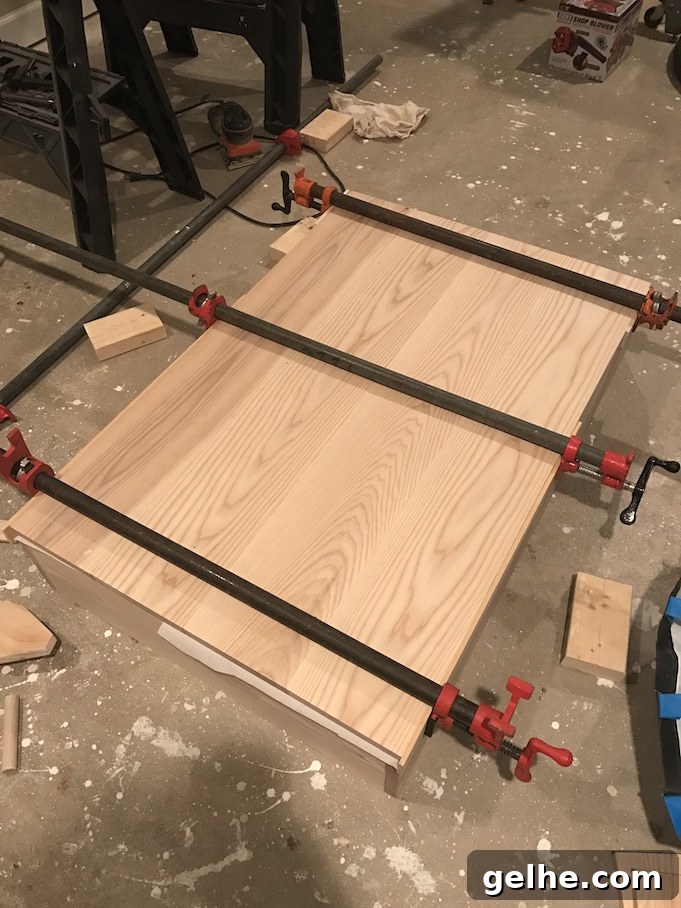
Step 6: Drill pocket holes in the bottom of three of the 39″ top boards, apply glue along the edges, clamp and screw them together to form the main top panel. Allow it to clamp overnight for a strong glue line.
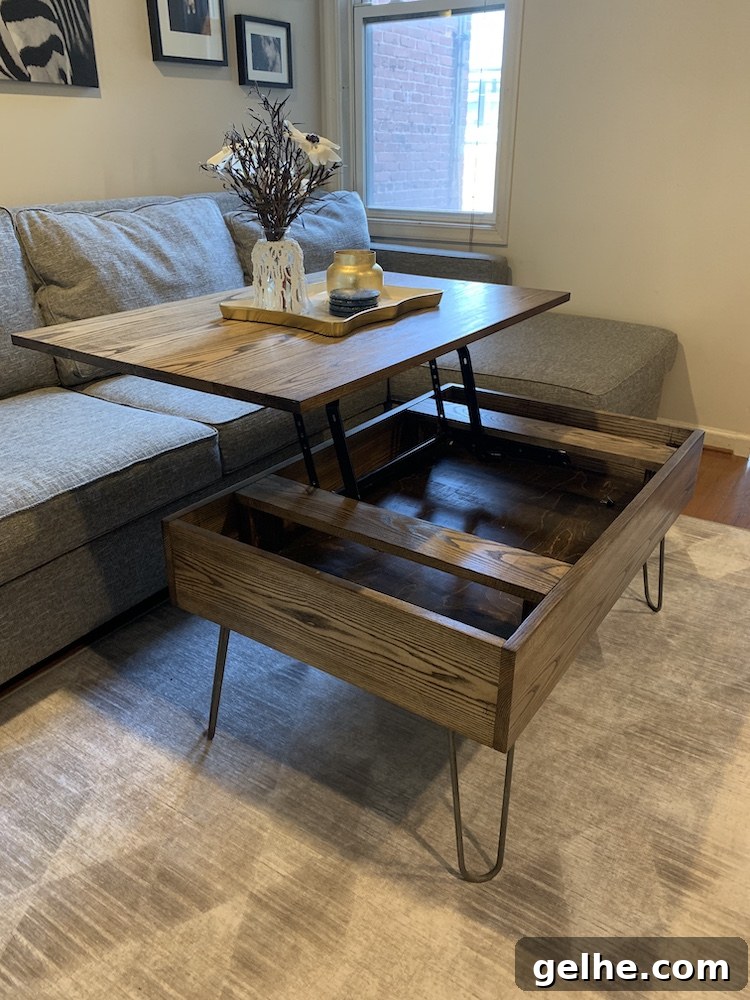
Step 7: Prepare the lift-top mechanism. Each mechanism mounts differently, so measure and plan how it will connect between the base and the underside of the top. In my build I used the two remaining 1×8 @ 24″ pieces as mounting rails for the mechanism and added small 2×4 blocks to reinforce the attachment points under the top.
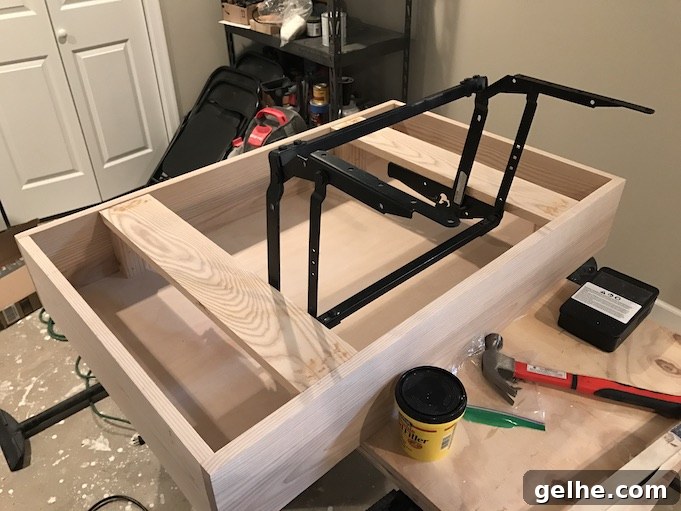
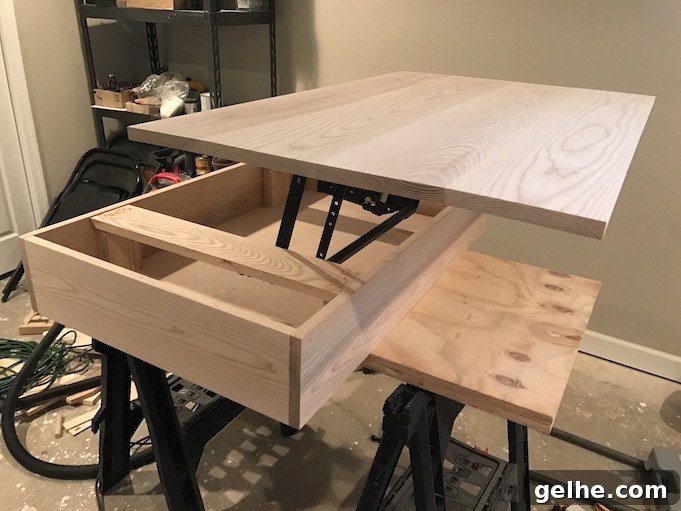
Step 8: With the mechanism mounted to the base, position the top on the mechanism and double-check alignment with the sides. Mark hole locations carefully—this step is critical. Test the lift several times to ensure smooth operation and make adjustments before permanently fastening the top to the mechanism.
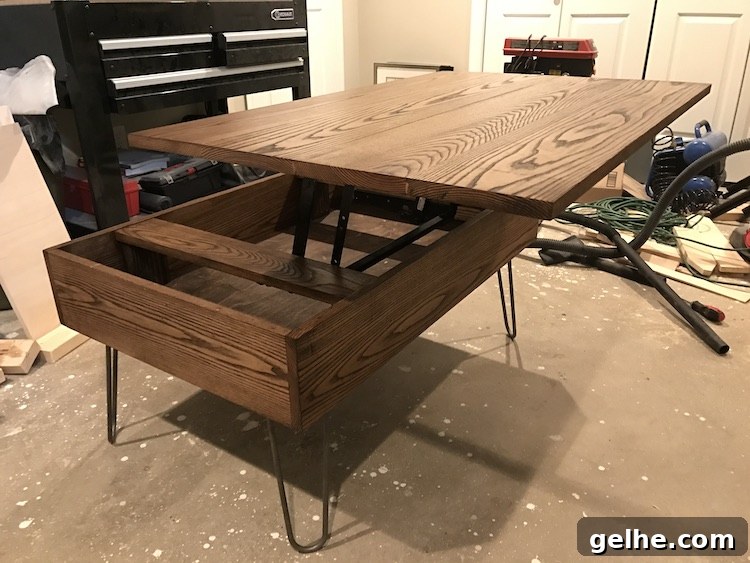
Step 9: Once everything is securely attached and the mechanism operates correctly, sand the entire table smooth, apply your chosen stain or paint, and finish with at least two coats of polyurethane for protection.
Other Project Ideas
- Wine Cooler Cabinet
- X Side Table
- Farmhouse Desk
- Sliding Door Entertainment Center
- Homemade Adirondack Chairs