I discovered that email is the most reliable way to keep readers updated and engaged with A Duck’s Oven. Social platforms are increasingly restrictive: Facebook limits the reach of posts unless you pay, Twitter’s character limit constrains content, and Instagram makes it harder for users to move from the app to a blog. Email gives you full control over timing, design, and content.
I already had an email audience, but it was smaller than my other social channels. I wanted a consistent way to grow subscribers, so I researched best practices and implemented a plan that produced measurable results.
Disclaimer: I mention MailChimp because it’s the service I use and I’ve been pleased with it. This post is based on my personal experience.
1. Use a dedicated email service. If you don’t have an email subscription option or are relying on Feedburner, consider switching to a service like MailChimp. For small lists it can be free and it offers much better control over campaigns than Feedburner.
When I made the switch I moved from sending an email for every new post to a weekly newsletter. I emailed my subscribers about the change and asked anyone who preferred post-by-post updates to remain on the Feedburner list.
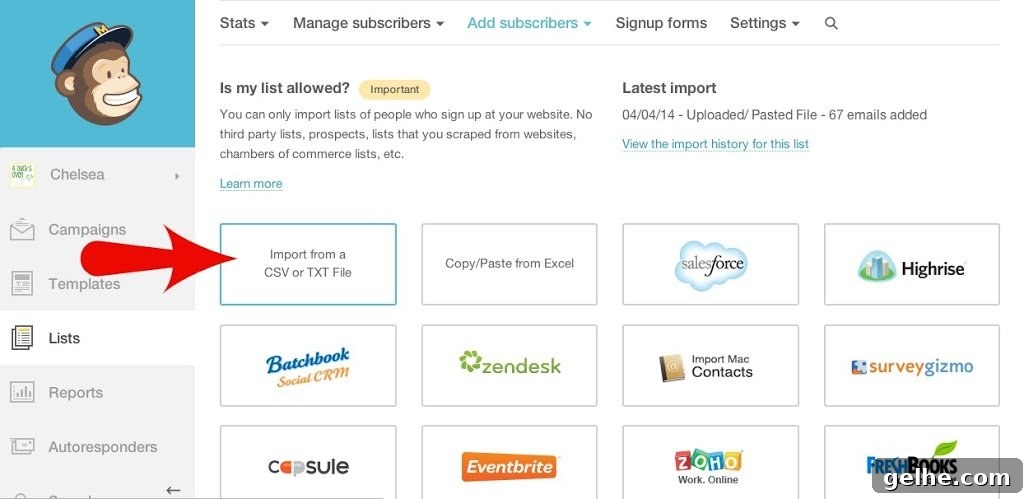
MailChimp made the transition straightforward. To export subscribers from Feedburner, go to Publicize > Email Subscriptions > Subscription Management, click Export: CSV and save the file. Then upload that CSV to MailChimp and deactivate the Feedburner subscription list.
Upload that file into MailChimp.
Then deactivate your Feedburner subscribers.
It was remarkably easy. MailChimp also lets you track campaign performance — who opened messages and who clicked links — which is very useful for improving future emails.
2. Make your signup form visible and simple. Place the signup form prominently on your blog and add a clear button on your Facebook page. The simpler the form, the more likely visitors are to subscribe.
3. Offer something valuable in exchange for an email address. You don’t need to give away expensive items, but offer something useful and relevant that will tip readers into subscribing. For retailers, a coupon or special offer works well. For a food blog, an eCookbook or similar downloadable resource can be very effective.
I wasn’t sure an exclusive recipe alone would convince people, so I decided to compile a simple eCookbook. An eBook can be as basic as a PDF — it doesn’t have to be complicated or costly to produce. I used Apple Pages to assemble recipes, created a cover in PicMonkey and Photoshop, and exported a PDF.
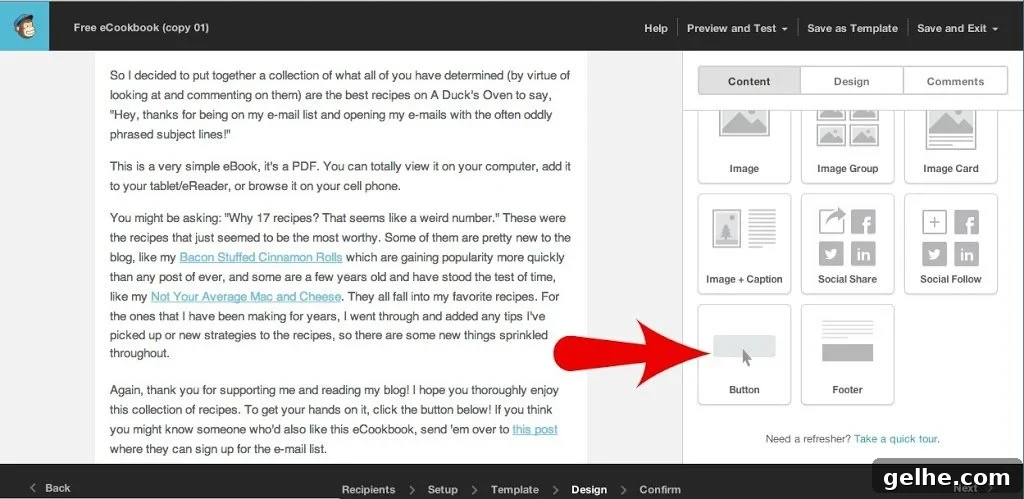
Once the eCookbook was ready, I created a MailChimp campaign and added a clear “Download” button at the end of the email. I uploaded the PDF to MailChimp for distribution.
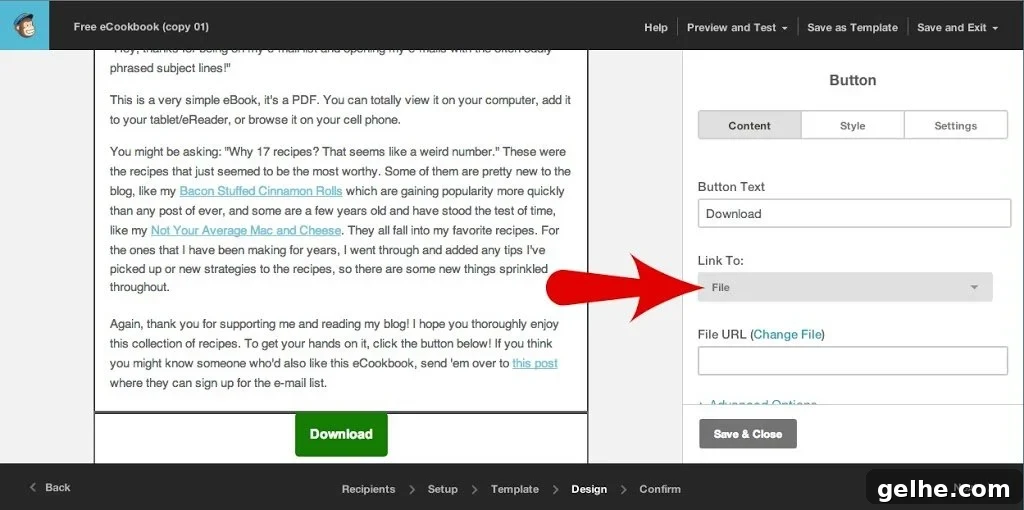
I considered third-party document hosts but most charge fees. Delivering the PDF directly via email was free and matched my goals of growing the subscriber list specifically.
I also published a blog post explaining how to get the eCookbook and embedded a signup form in that post to make it easy. After announcing the offer via email and promoting it on Facebook, Twitter and Instagram, I monitored responses closely.
New signups started coming in. Before the eCookbook, I averaged one or two signups per week. After the promotion, I received a surge over a few days and now consistently gain three to five new subscribers each week.
In three weeks my email list grew by 25%. The eCookbook resonated with readers and the blog post was shared frequently.
To keep the eCookbook visible, I added a “Free eCookbook” tab on the blog and placed a linked cover image in the sidebar.
This strategy worked for a few clear reasons:
- It only cost time, not money — though it required a significant time investment.
- The offer was appealing enough that visitors were willing to subscribe to receive it.
- The signup process was simple. Asking for only an email lowered friction and increased conversions.
I hope these tips help you grow your own blog mailing list. What strategies have worked for you?