
Chicken Pesto Sandwich Recipe
Simple kitchen moments can become memorable, and this Chicken Pesto Sandwich is one of those easy winners I reach for when I want a quick, satisfying meal. It began as a weekday rescue and soon became a favorite for relaxed weekend lunches. The flavors are bright and unfussy, with a pleasing balance of textures: crisp toasted bread, herbaceous pesto, tender chicken, melty mozzarella, and fresh spinach. If you want a sandwich that tastes thoughtfully composed yet is fast to assemble, this is a reliable go-to.
How This Sandwich Joined My Weeknight Rotation
This sandwich first appeared on a rainy evening when I had leftover roasted chicken and a small jar of pesto that needed using. The kitchen filled with the scent of toasted bread and basil. I pressed the warm toast together and listened to the mozzarella soften against the chicken. The spinach added a crisp, green lift that made each bite feel lighter and fresher. Since then, the combination of bright pesto, tender chicken, and melty cheese wrapped in toasted bread has become a quick comfort food I make often. Recreating it now brings back that first warm bite and the way the flavors unfold—simple, satisfying, and easy to prepare.
Why Each Ingredient Matters
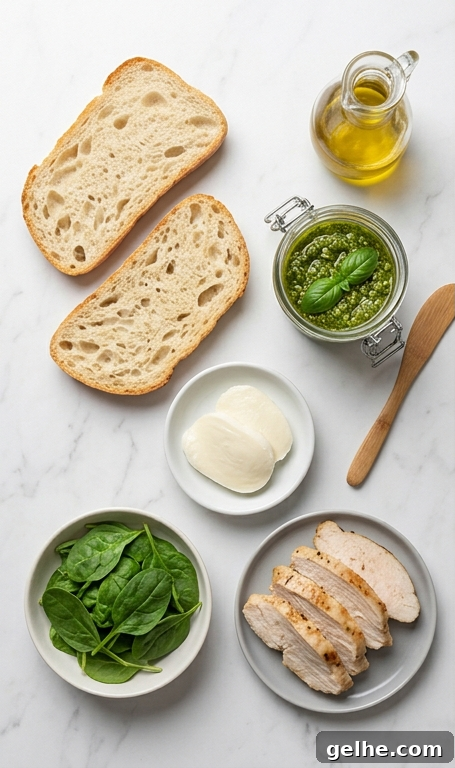
- Bread: The foundation that holds everything together. Choose a sturdy loaf with a slightly open crumb so the bread absorbs a bit of pesto without falling apart. Ciabatta or sourdough add extra flavor.
- Pesto sauce: The primary flavor driver. It brings herbaceous brightness and richness. Use store-bought in a pinch or make a quick basil or arugula version for fresher flavor.
- Cooked chicken breast: Provides protein and substance. Rotisserie or leftover roasted chicken saves time; thin slices layer evenly.
- Mozzarella cheese: Adds creaminess and mild melt. Fresh mozzarella gives a pillowy texture; low-moisture works if you prefer less moisture.
- Fresh spinach leaves: Offer a crisp, slightly bitter contrast. Swap with arugula or baby kale for a peppery kick.
- Olive oil: A light drizzle at the end adds gloss and aroma; a little goes a long way.

Essential Kitchen Tools
Keep tools simple for quick assembly and a clean result. A toaster or hot pan gives even browning so the bread has structure. A sharp chef’s knife slices the sandwich cleanly. A spreader helps distribute pesto without tearing the toast, and a cutting board provides a stable surface.
- Toaster or skillet: For consistent toast; use a panini press if you want a pressed finish.
- Sharp knife: Ensures clean halves and even layers.
- Spreader: Works pesto into warm bread without damaging the crumb.
- Cutting board: Keeps assembly stable and tidy.
- Small jar or bowl: Holds extra pesto for topping or later use.
Step-by-Step Preparation Guide
Step 1: Toast the bread
Toast two slices lightly until they’re warm and golden-brown—crisp at the edges but still tender inside. Avoid over-browning so the crumb stays airy and can absorb a little pesto without collapsing. Set the toast aside to cool briefly.
Step 2: Spread the pesto
Spoon about one tablespoon of pesto onto each slice and use a spreader to work the sauce into the warm toast, creating an even green sheen. Keep extra pesto nearby in a small jar for topping or future uses.
Step 3: Layer the chicken
Arrange sliced cooked chicken breast in a single overlapping layer on one pesto-coated slice, aiming for even coverage so every bite has tender, juicy meat.
Step 4: Add the mozzarella
Top the chicken with slices of mozzarella. The residual warmth from the toast will slightly soften the cheese, helping it bind the layers together.

Step 5: Top with spinach
Add a handful of fresh spinach leaves over the mozzarella for brightness and crisp texture. Spinach balances the richness of the pesto and cheese.
Step 6: Close the sandwich
Place the other pesto-coated slice of toast on top, pesto side down, and press lightly so the layers nest together evenly and the pesto helps bind everything.
Step 7: Drizzle olive oil
Finish with a delicate drizzle of olive oil across the top for a glossy appearance and aromatic lift. Keep the drizzle light to maintain balance.
Step 8: Cut and serve
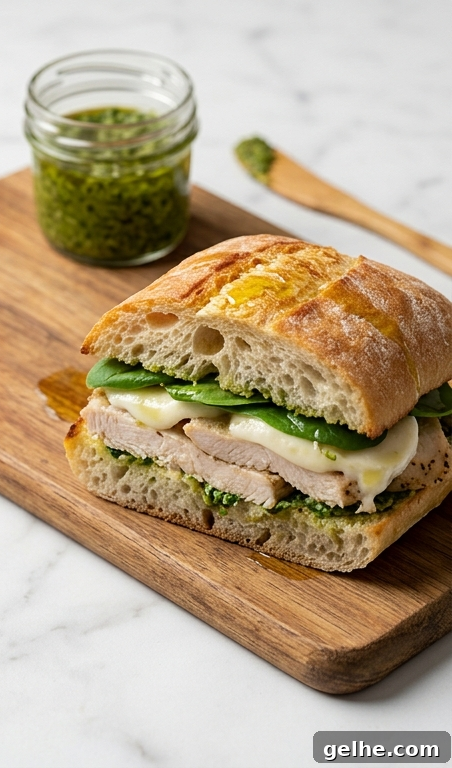
Use a sharp knife to cut the sandwich cleanly in half and reveal the layered cross-section—golden crust, airy crumb, tender chicken, melty mozzarella, and fresh spinach. Serve immediately for the best texture and contrast.
Making It Your Own
Customize the Chicken Pesto Sandwich to suit your tastes. For a vegetarian version, swap chicken for grilled zucchini or roasted portobello and add a smear of sun-dried tomato paste for extra umami. Add a pinch of red pepper flakes to the pesto or a layer of pickled peppers if you prefer spice. For a Mediterranean twist, use feta instead of mozzarella and add thin cucumber slices.
In cooler months, replace fresh spinach with sautéed greens and choose a heartier seeded sourdough. Small changes like switching the cheese or bread adapt the sandwich to the season or your mood while keeping the core flavors intact.
How to Serve
When hosting, cut the sandwich on the diagonal and pair it with a bright side salad dressed simply with lemon and olive oil. Stack halves slightly offset to showcase the layers. For a picnic, wrap each sandwich in parchment and tuck into a lunchbox with a crisp apple.
To serve more guests, double or triple the ingredients and assemble just before serving so the bread stays crisp. For a warm, pressed version, use a panini press until the mozzarella softens and the exterior is golden. Garnish with microgreens or a sprinkle of flaky sea salt for a finishing touch.
Storage and Reheating Tips
Leftovers keep best uncut in an airtight container for up to 24 hours. If you expect leftovers, store pesto separately to prevent soggy bread. Keep spinach loose in a paper towel–lined container to preserve texture.
To reheat, warm the sandwich in a skillet over medium-low heat and cover briefly so the cheese melts without drying the bread. Avoid microwaving if you want to retain crisp edges; if using a microwave, follow with a quick re-toast in a skillet.
Common Mistakes and How to Avoid Them
Using too much wet ingredient is the easiest way to end up with a soggy sandwich. Use a moderate amount of pesto and pat wet spinach dry if necessary. Choose bread with enough structure to hold the filling, and assemble close to serving time so the texture stays optimal.
Final Thoughts
Try the Chicken Pesto Sandwich this week—it’s a simple recipe that responds well to small adjustments and makes a quick, delicious meal any day. Once you find your favorite bread and pesto combination, this sandwich will likely become one of your go-tos.
Frequently Asked Questions.
- What bread is best for the Chicken Pesto Sandwich? A sturdy sourdough or ciabatta works well so the sandwich holds together without collapsing.
- Can I use leftover rotisserie chicken? Yes—rotisserie chicken is perfect and keeps prep time low.
- Is homemade pesto necessary? Store-bought pesto works fine; homemade adds extra freshness but isn’t required.
- How do I keep the sandwich from getting soggy? Toast the bread well and use pesto sparingly; store components separately if making ahead.
- Can I make this sandwich vegetarian? Absolutely—swap chicken for grilled vegetables or a plant-based protein.