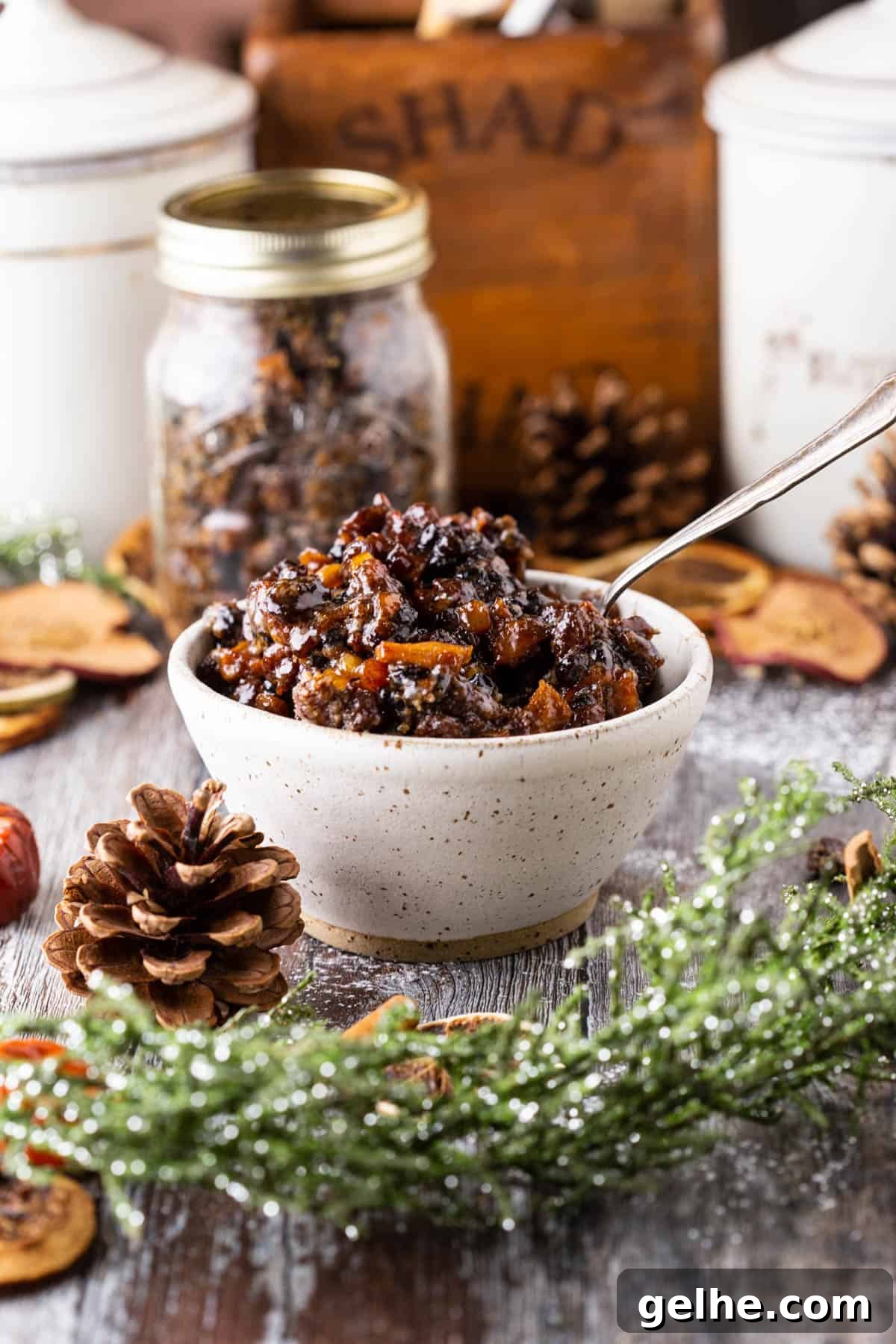
This Easy Mincemeat Recipe is perfect when you need homemade mincemeat quickly. If you want a mincemeat ready to use straight away, this is the recipe for you. No resting time is needed: a quick assembly yields delicious, plump fruit, bright citrus zest, warming spices, a rich brandy note and a silky, luxurious texture.
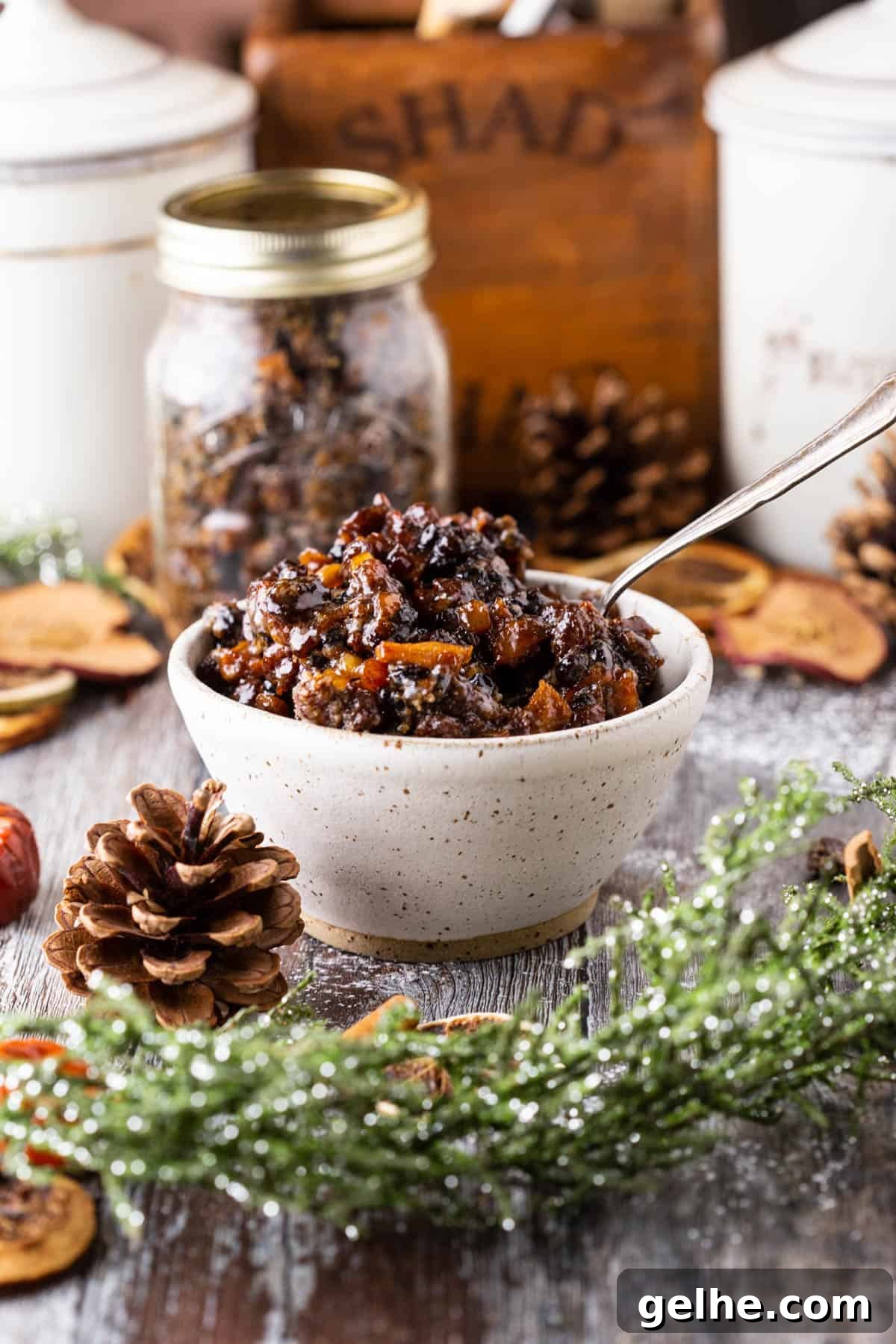
I adore Christmas mincemeat. To me it’s one of the best parts of the season—alongside decorating the tree and those special stocking moments. Traditionally, Stir-up Sunday (the last Sunday before Advent) was the day to make mincemeat so you had mince pies available throughout the holidays. If you don’t get organised in November, don’t worry: this quick mincemeat will save the day when you want to bake last-minute mince pies in December.
This is a traditional mincemeat recipe inspired by classic versions, including the richness that suet brings. However, many commercially sold suets are coated in wheat flour and are not gluten-free. I’ll explain how to make a traditional suet mincemeat while keeping it gluten-free, how to cook and store it safely, and ideas for using your mincemeat beyond mince pies.
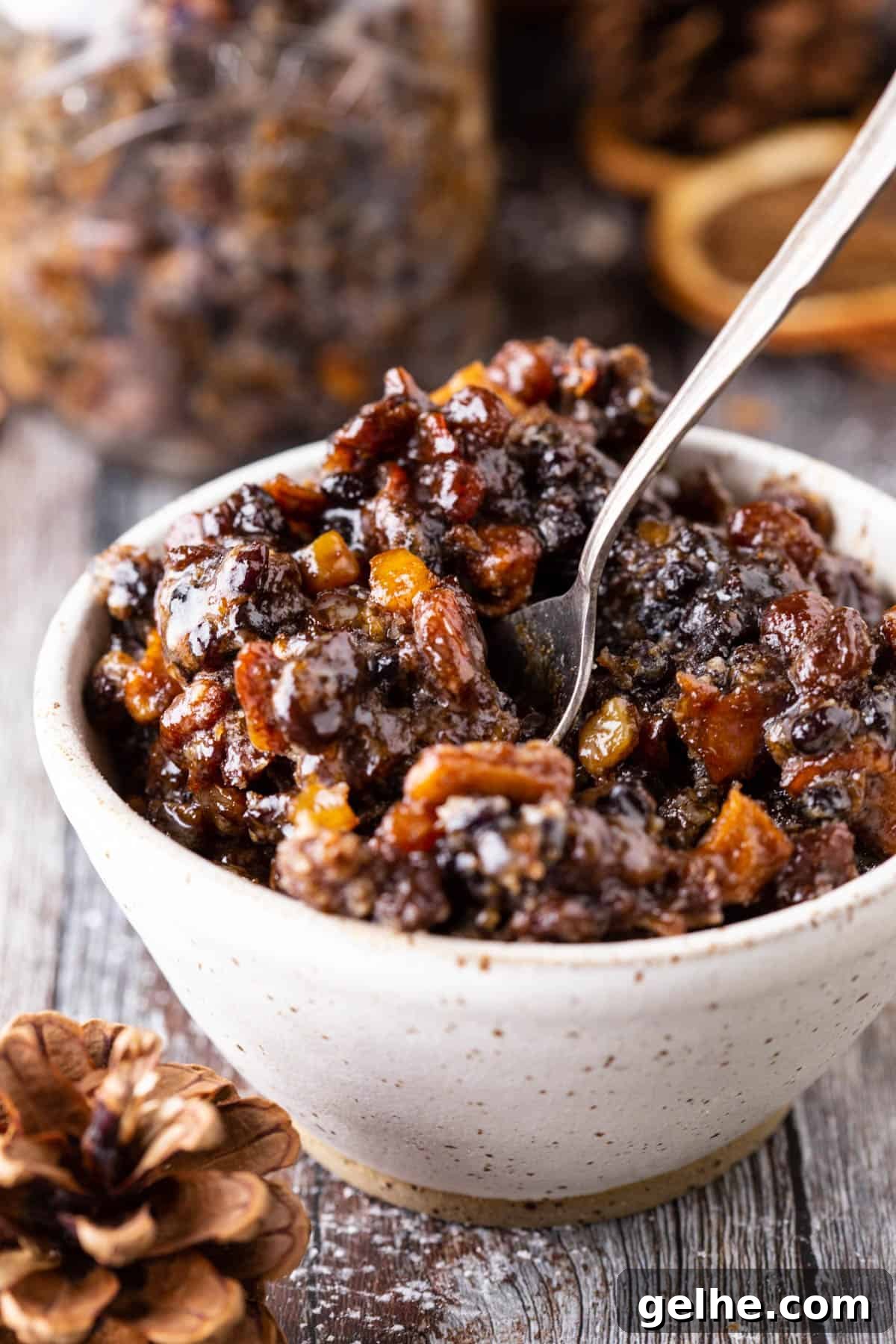
What is mincemeat?
Mincemeat is the traditional filling for a Christmas mince pie. Originally, mincemeat preserved meat—often mutton—by mincing it finely and combining it with spirits, spices and sugar. Today the meat is usually replaced by beef suet and dried fruit, resulting in a sweet, spiced fruit mixture that remains the heart of the mince pie.

Why do we eat mincemeat at Christmas?
We associate mince pies with Christmas largely because of the spices: cinnamon, cloves and nutmeg. These warm spices have long been linked to festive traditions, and mincemeat—rich with spice—became synonymous with the season. If you love mince pies year-round, try variations such as Eccles cakes or other fruit-filled pastries that can be enjoyed any time.

A Very Merry Gluten-Free Christmas
A comprehensive guide to celebrating a gluten-free Christmas with recipes, timings and hosting tips.
Homemade mincemeat vs. shop bought
The difference between homemade mincemeat and shop-bought is significant. Store-bought versions are often overly sweet and lack depth of flavour. Homemade mincemeat packs juicy fruit, warming spice and a touch of brandy for a rich, balanced taste.
This recipe is versatile: swap dried fruits, alcohol or sugar to suit what you have. The result will almost always outshine the supermarket jars.
Why You’ll Love This Easy Mincemeat
- If you need to make mince pies quickly, this recipe is ideal.
- Simple and quick to prepare.
- A back-to-basics approach using traditional fruit and spices.
- Rich, spiced flavour and silky texture from suet.
- No resting time required for immediate use.
- You don’t need to cook the mincemeat before using it in pies if you plan to eat them straightaway.
- This version can be gluten-free if you source fresh beef suet or follow the notes below.
- The suet gives a luxurious, smooth finish that’s perfect in gluten-free mince pie recipes.
Ingredients and notes
Beef Suet
Beef suet is the hard fat from around the kidneys and joints. It adds richness and a smooth coating to the fruit, contributing to the classic texture of traditional mincemeat.
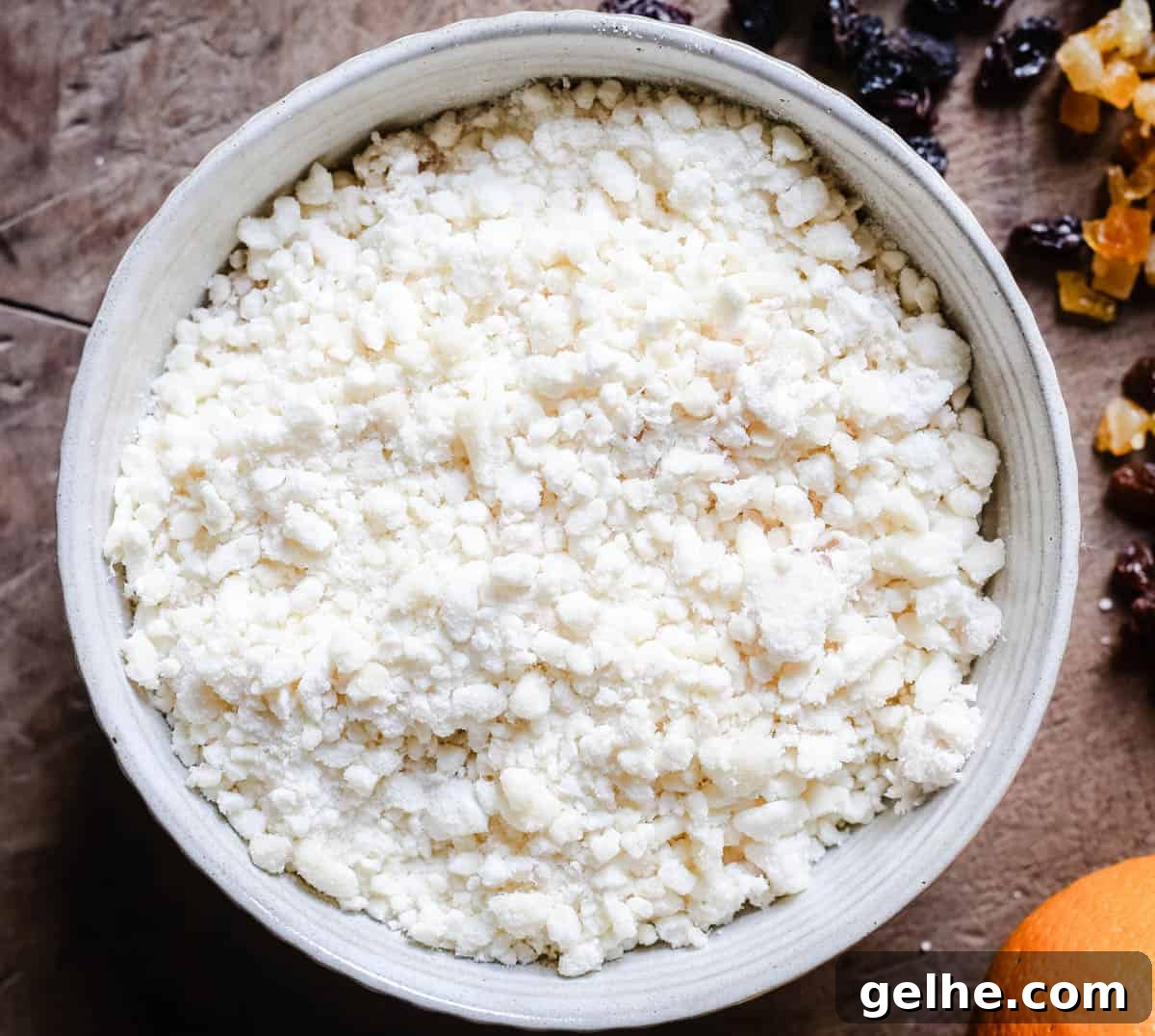
Is beef suet gluten-free?
Commercial packeted suet is often coated in wheat flour and is therefore not gluten-free. If you follow a gluten-free diet, check packaging carefully or use fresh suet sourced from a butcher.
Can you buy gluten-free suet?
Some supermarkets sell vegetable-based gluten-free suet, but the flavour and texture are different. For the best result, ask your butcher for fresh beef suet. If it’s supplied in pellets you can use them as they are; if it comes as a block, grate it with a little gluten-free flour to create small pieces that distribute evenly. Fresh suet freezes well in an airtight container and can be used straight from the freezer.
Fresh suet also works well in traditional Christmas pudding and other steamed puddings.
The rest of the ingredients
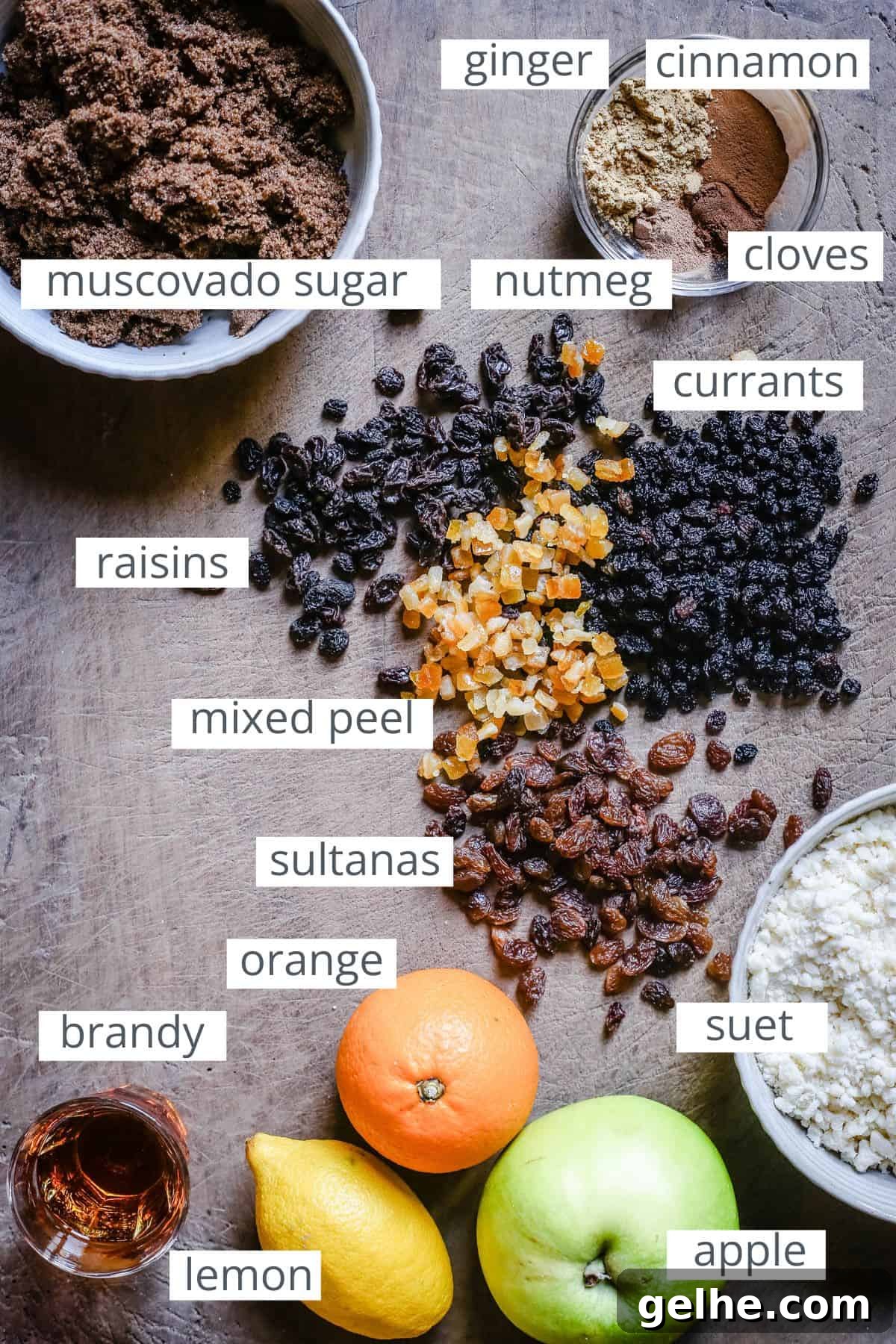
Bramley apples: a tart cooking apple that breaks down beautifully, creating a fluffy texture.
Dried fruit: a traditional mix of raisins, currants and sultanas, plus mixed peel for brightness.
Dark muscovado sugar: adds depth and a molasses-like note.
Lemon and orange zest: provide a fresh citrus lift.
Spices: ground ginger, cinnamon, cloves and nutmeg give warmth and complexity.
Brandy: traditionally used to help preserve the mincemeat and to enrich the flavour. You can substitute other spirits or juices if needed.
Variations and Substitutions
Apples: Bramleys are ideal, but Granny Smith works if needed.
Dried fruit: Swap in cranberries, glace cherries, chopped figs or prunes to suit your taste.
Suet alternatives: I don’t recommend commercial vegetarian suet. Coconut oil can work for a vegan version, or follow a specific vegan mincemeat recipe to get the best flavour balance.
Sugar: Use light muscovado or soft brown sugar for a lighter finish if preferred.
Ginger: Add chopped stem ginger for extra warmth and a little bite.
Brandy substitutes: Dark rum, Pedro Ximénez, Cointreau or Amaretto are excellent choices. For an alcohol-free version use apple juice or a mix of orange and lemon juice to balance sweetness.
How to Make Gluten-Free Mincemeat
For full recipe instructions see the recipe card below.
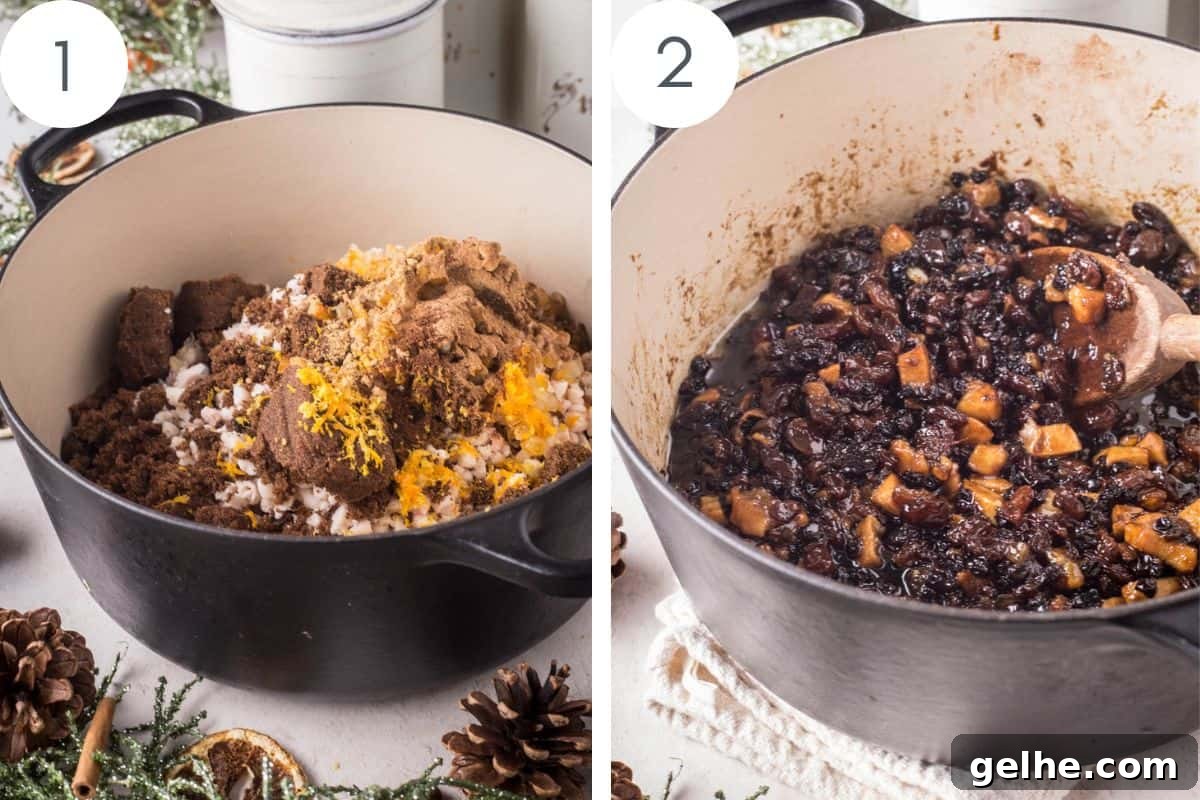
- Mix ingredients: Peel, core and dice the apples, then combine them with the dried fruit, suet, sugar, mixed peel, zest and spices in a large ovenproof pot. Do not add the brandy yet.
- For immediate use: Reserve about 250–300g for mince pies. Stir in a little brandy, chill briefly if needed and use straightaway.
If you plan to store the mincemeat rather than use it immediately, cook it so the suet melts and the sugar and fat coat the fruit, which helps preserve it and prevents fermentation.
- To store for later: Cover the pot and bake at 160°C / 140°C fan / gas mark 3 / 320°F for 1 hour.
- Cool and add brandy: Let the mincemeat cool to room temperature, then stir in the brandy.
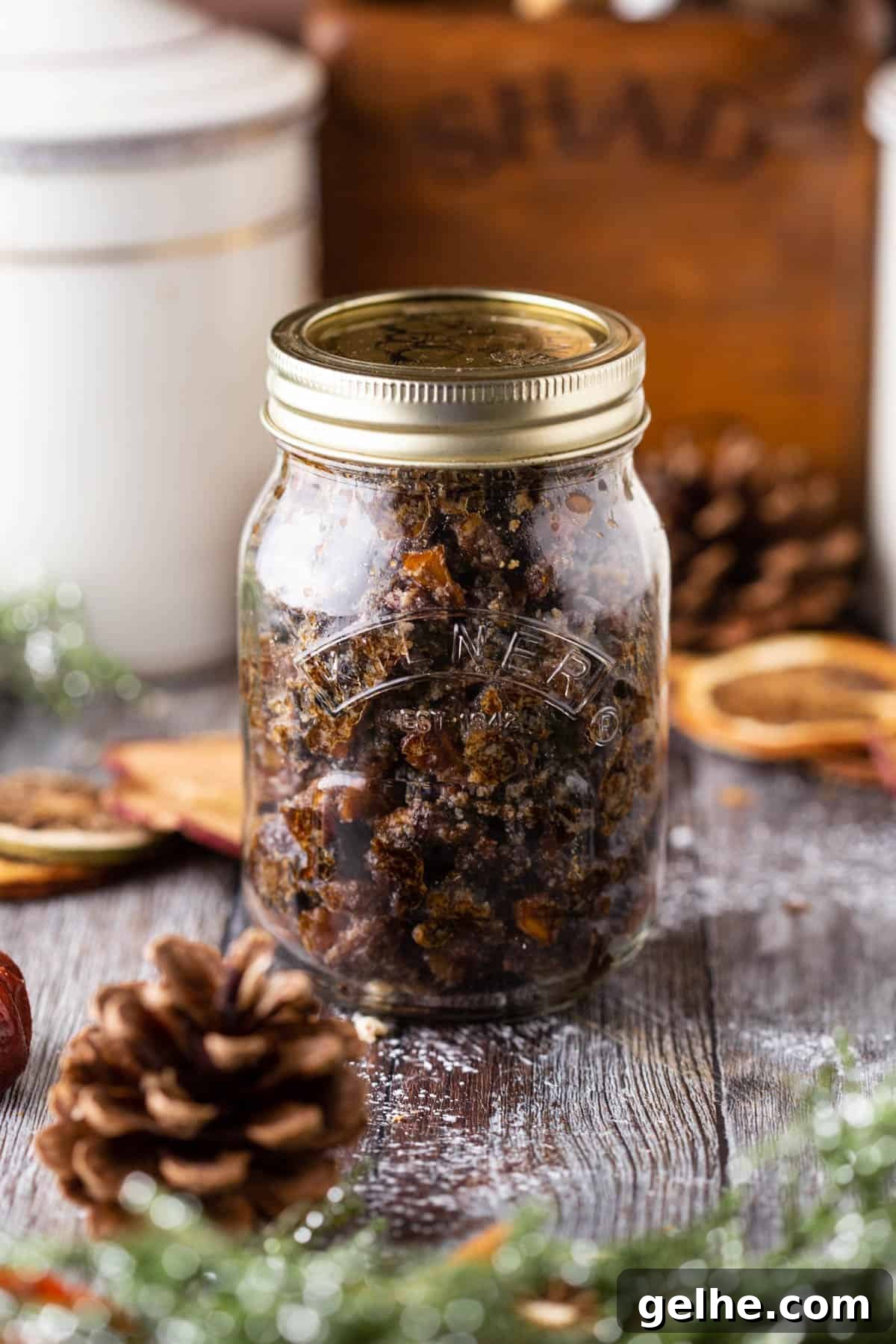
- Jar and store: Transfer to sterilised jars and keep in a cool, dark place for up to a year.
How to store
If you intend to use your mincemeat within a few weeks, cooked mincemeat stored in an airtight container in the fridge will be fine.
For long-term storage: decant cooled mincemeat into sterilised jars and keep in a cool, dark place for up to a year.
- Sterilise jars: Place clean jars in an oven preheated to 150°C / 130°C fan / gas mark 2 / 300°F for 20 minutes. Sterilise lids by boiling for 10 minutes—avoid putting lids in the oven as they can be damaged.
Recommended Equipment
- Large ovenproof preserving pan or casserole—big enough to mix and cook a substantial batch of mincemeat.
- Jam funnel or decanting funnel to transfer mincemeat into jars without mess.
- Sterilising jars such as Kilner jars (approx. 500 g) with new lids for long-term storage.
Gluten-Free Mince Pie Recipes
-
Gluten-Free Mince Pies with Homemade Pastry
-
Gluten-Free Frangipane Mince Pies


FAQs
Swap brandy for rum, Pedro Ximénez, Cointreau, Amaretto or other spirits. For an alcohol-free option use apple juice or a mix of orange and lemon juice.
Leave it out or substitute a couple of tablespoons of marmalade for a citrus note. Homemade mixed peel has superior flavour if you have the time.
Yes—chopped figs, prunes, cranberries or sour cherries work well. Use the same weight of an alternative dried fruit.
Yes—use coconut oil or a vegan suet alternative, although flavour and texture will differ. There are dedicated vegan mincemeat recipes if you prefer.
This recipe yields about four 300–380 g jars—enough for several batches of mince pies. If you won’t use it all immediately, cook and jar the remainder as instructed above.
Yes—mince pies are delicious with mincemeat made minutes earlier. Flavours will deepen if you make the mincemeat a week or two ahead.
How to Use Leftover Mincemeat
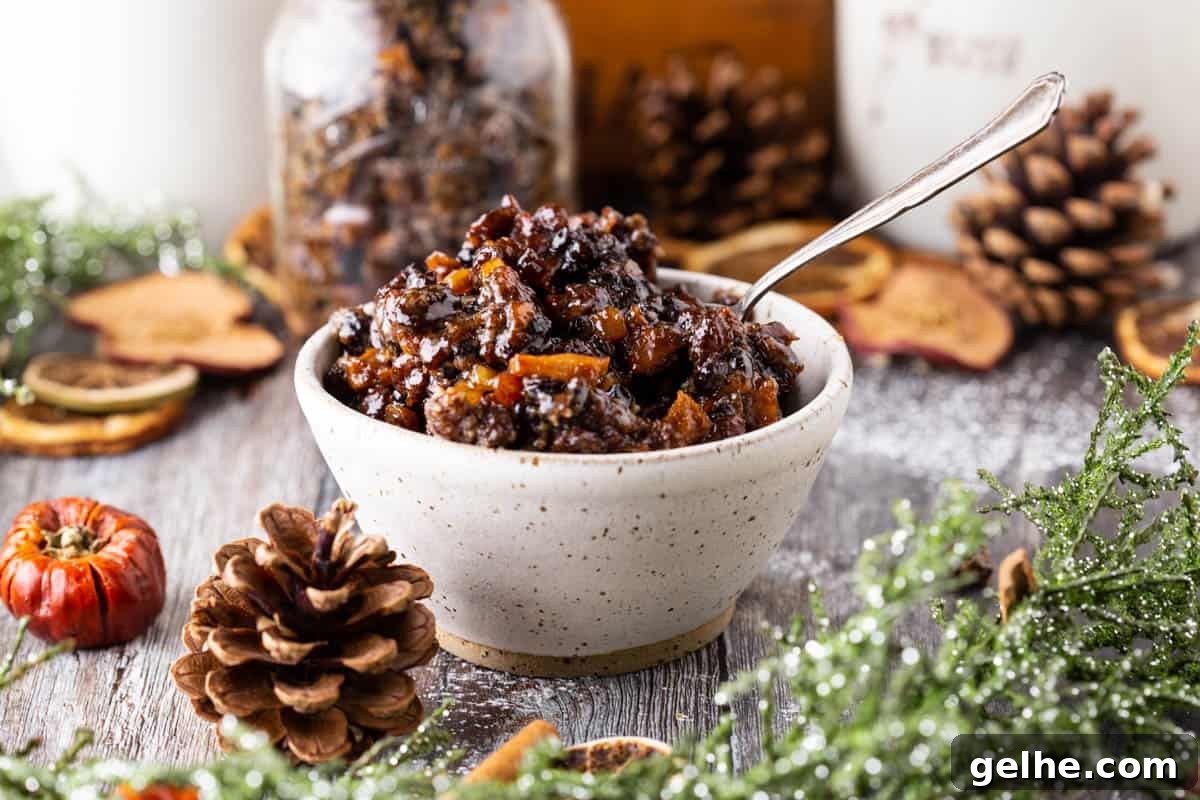
Besides classic mince pies, use leftover mincemeat in thumbprint cookies, tarts, mincemeat pies, muffins, crumble bars or as a flavour boost in puddings and cheesecakes.
-
Mince Pie Crumble Bars (gluten-free)
-
Mince Pie Cupcakes with Brandy Buttercream
-
Christmas Mincemeat Muffins (gluten-free)
-
Bramley Apple and Mincemeat Pudding




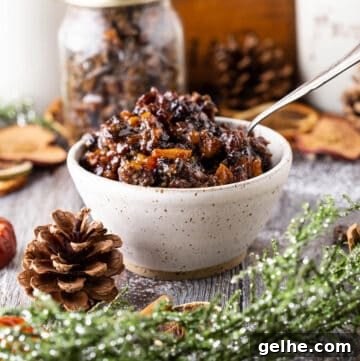
Easy Mincemeat Recipe (with gluten-free suet)
Ingredients
- 400 g bramley apples – about 1–2 apples
- 225 g seedless raisins
- 225 g currants
- 225 g sultanas
- 240 g beef suet (for gluten-free suet see notes)
- 275 g dark muscovado sugar
- 50 g mixed peel (homemade preferable)
- zest 1 orange
- zest 1 lemon
- 2 teaspoons ground ginger
- 1 teaspoon ground cinnamon
- ½ teaspoon ground cloves
- ½ teaspoon ground nutmeg
- 60 ml brandy
Instructions
- Peel, core and dice the Bramley apples into small pieces.
- Place the apple pieces in a large ovenproof pot with the dried fruit, suet, sugar, mixed peel, citrus zest and spices. Stir until well combined. Do not add the brandy yet.
- To make mince pies immediately, set aside about 300 g of the mixture, stir in a couple of teaspoons of brandy and use to fill your prepared pastry.
- To prepare the rest for storing: cover the pot and bake in an oven preheated to 150°C / 130°C fan / gas mark 2 / 300°F for 1 hour.
- Leave the mincemeat to cool completely, then stir in the brandy.
- Decant into sterilised jars and store in a cool dark place for up to a year.
Notes
- Gluten-free suet: Use fresh beef suet from your butcher. Pelleted suet is fine; if supplied as a block, grate it with a little gluten-free flour so it disperses evenly. I don’t recommend commercial vegetarian suet for authenticity of flavour. For a vegan mincemeat consider dedicated vegan recipes using coconut-based fats.
- Yield: Approximately 4 x 380 g jars.
- Immediate use: You can make mince pies straight away with this mincemeat; for storage you should cook and jar it.
- Sterilising jars: Place clean jars in an oven at 160°C / 140°C fan / gas mark 3 / 320°F for 20 minutes. Boil lids for 10 minutes—do not oven-sterilise lids.